
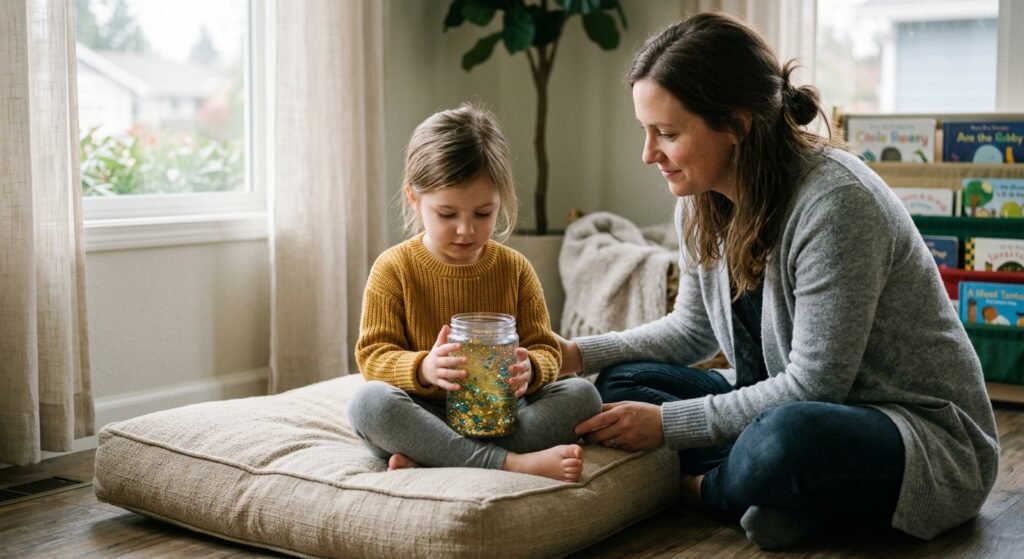
Children learn to manage big feelings by practising, with a calm adult beside them, not by being told to calm down. The best emotional regulation activities for kids are short, playful and repeated when everyone is relaxed, so the skills are ready when feelings run high. Below you will find the key ideas, a set of self regulation activities by age and tips for teaching kids to manage emotions day to day.
What is emotional regulation?
Emotional regulation is the ability to notice a feeling, tolerate it and respond in a helpful way. Children are not born with it. Skills such as impulse control and planning develop gradually through childhood and adolescence, so a six-year-old may still struggle with seemingly small frustrations. Kids borrow calm from adults first (co-regulation) and slowly build their own (self regulation).
The foundation: name it, then tame it
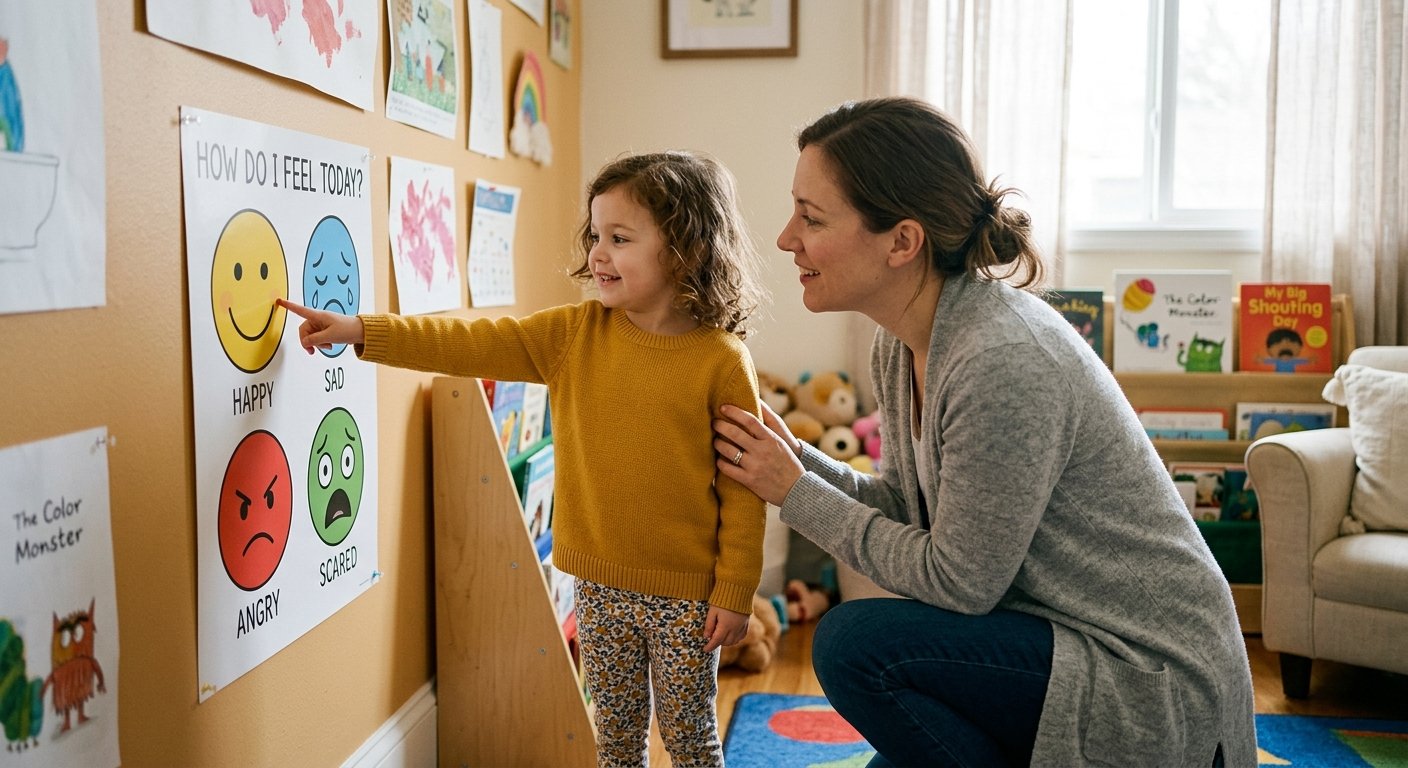
A helpful starting point is often called "name it to tame it." Putting feelings into words can help children understand what they are experiencing and communicate what they need.
- Use simple feeling words: mad, sad, scared, excited, frustrated, jealous.
- Label what you see: "You look frustrated. The tower fell down."
- Share your own: "I’m feeling a bit stressed, so I’m going to take a deep breath."
- Accept the feeling, guide the behaviour: "It’s okay to be angry. It’s not okay to throw."
Calming activities for children
These ages are starting points, not milestones. Adapt activities to your child’s abilities and preferences, and do not force a calming tool that makes them uncomfortable.
Breathing games (ages 2+)
- Smell the flower, blow out the candle: a slow breath in through the nose, a slow breath out through the mouth.
- Belly breathing with a toy: lie down with a soft toy on the tummy and watch it rise and fall.
- Hot chocolate breathing: breathe in the "smell," breathe out to cool it down.
Body-based activities (ages 3+)
- Squeeze and release: tense fists like squeezing lemons, then relax.
- Wall push-ups or heavy work: pushing, carrying or crawling can settle a wound-up body.
- Animal movements: slow bear walks, stretching like a cat, or floating like a jellyfish.
Sensory and creative activities (ages 3+)
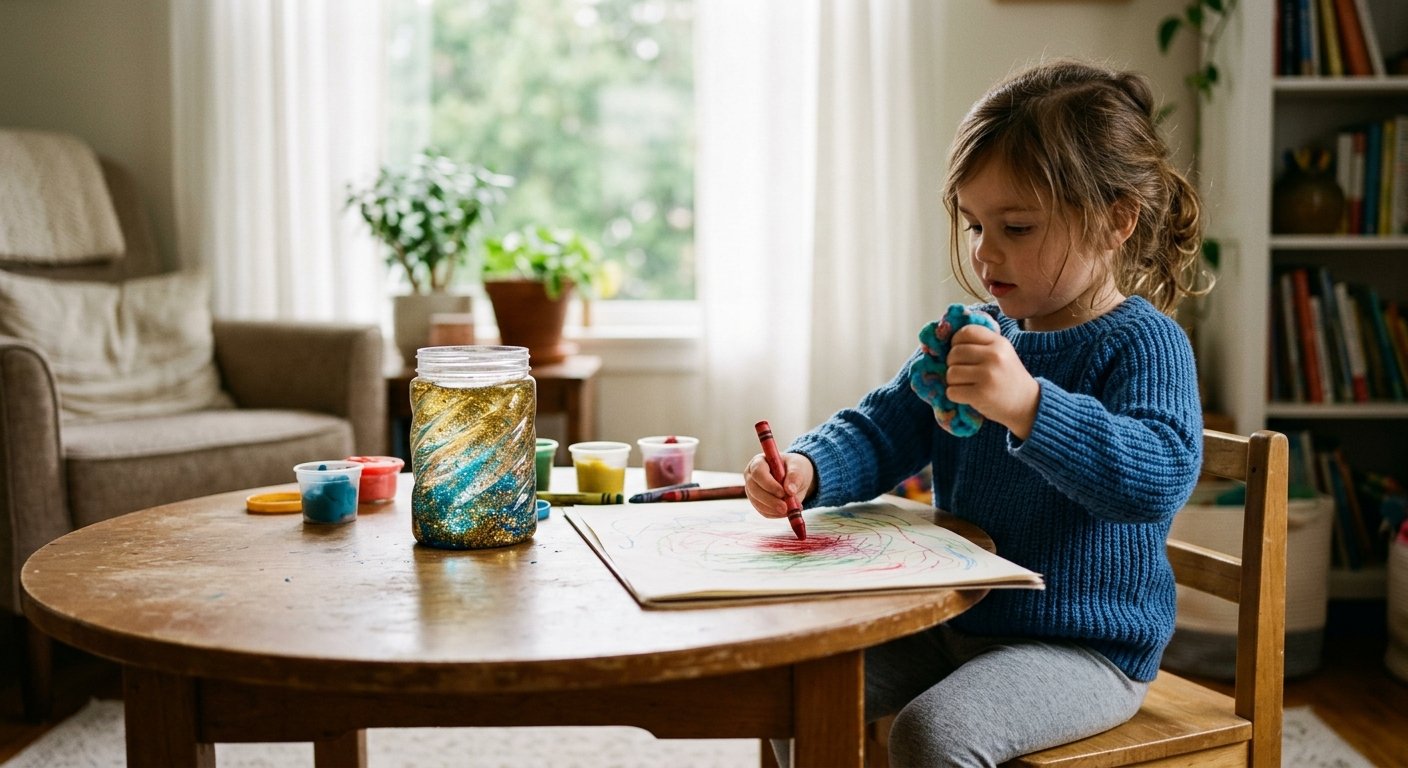
- Calm-down jar: watch glitter settle in a securely sealed, shatter-resistant jar as you breathe together. An adult should prepare and supervise it; keep loose glitter and small parts out of reach.
- Drawing feelings: colour how the feeling looks in the body.
- Play dough or sensory bins: squeezing and moulding gives the hands a job. Use age-appropriate materials with adult supervision, and avoid small parts that could be swallowed.
Thinking-based activities (ages 5+)
- Feelings thermometer: rate a feeling from 1 to 5 and choose a tool for each level.
- Stop, breathe, think: pause, take three breaths, then pick a response.
- Problem-solving scripts: "What happened? How do I feel? What can I try?"
Build a calm-down corner
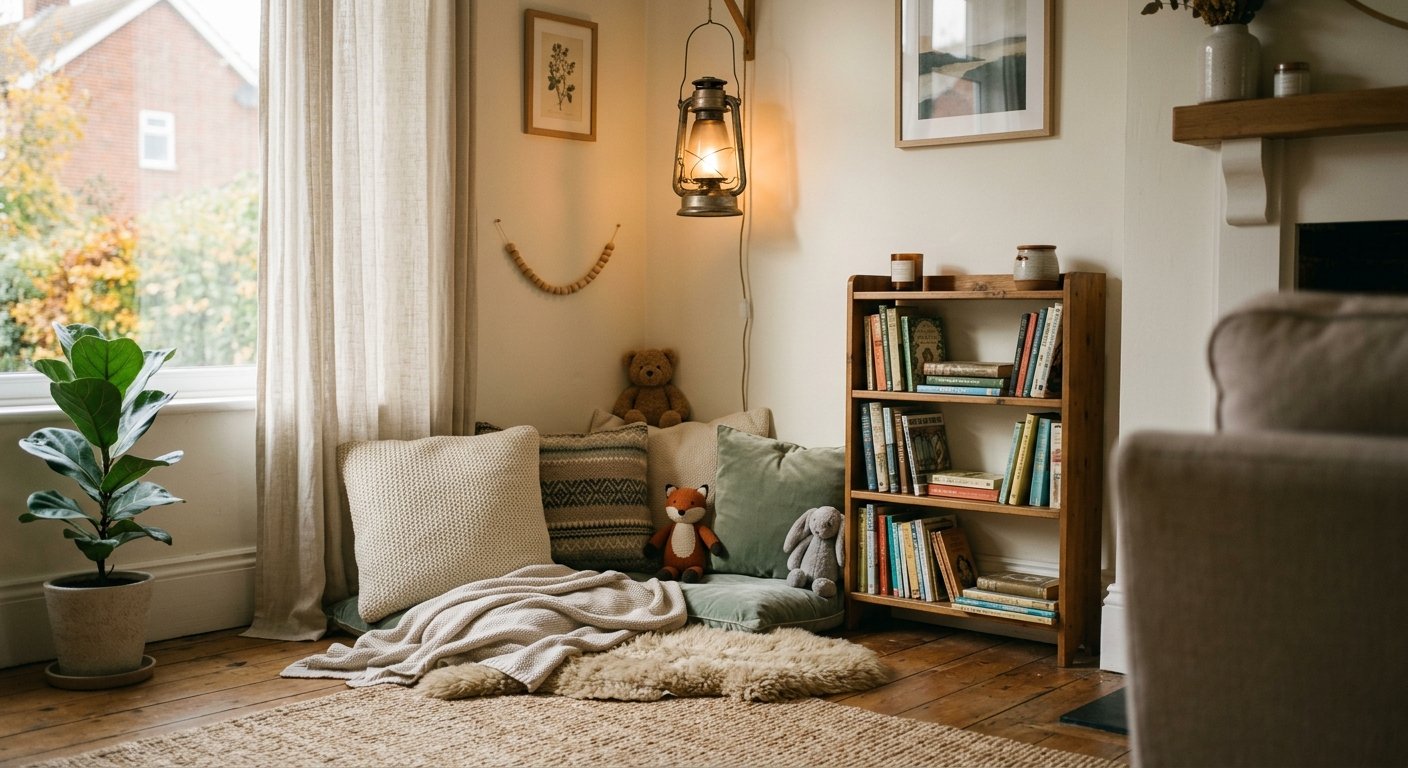
A calm-down corner is a cosy space with soft cushions, a few books, a calm-down jar, a feelings chart and some fidget toys. It is a place to settle, not a punishment, and works best when your child helps set it up and you practise using it together when things are calm. Sit with them at first if they need it.
Tips that make these activities work
- Practise when calm. Skills are hard to learn mid-meltdown. Make breathing and feelings games part of bedtime or play.
- Stay calm yourself. Your steady tone and slow breathing are the strongest tool you have.
- Keep it short and fun. Two minutes of play beats a lecture.
- Be consistent. The same routines and phrases create security.
- Praise effort. "You took a deep breath. That was hard, and you did it."
- Look after basics. Hunger, tiredness and too much stimulation make regulating much harder.
When to seek extra help
Talk to your pediatrician or a child mental health professional if intense outbursts are very frequent or long, cause injury, make school or friendships hard, or come with ongoing worry, low mood or sleep problems. Seeking support is a strength, and early help makes a real difference.
The takeaway
Teaching kids to manage emotions is a slow, shared process. Name feelings, practise calming tools together when things are quiet and offer your own calm when they are not. Over time, your child builds a toolbox of their own.
Disclaimer: This article is general information, not medical advice.
Related reading
- Gentle parenting vs permissive parenting: understanding kind, firm limits
- Toddler developmental milestones