
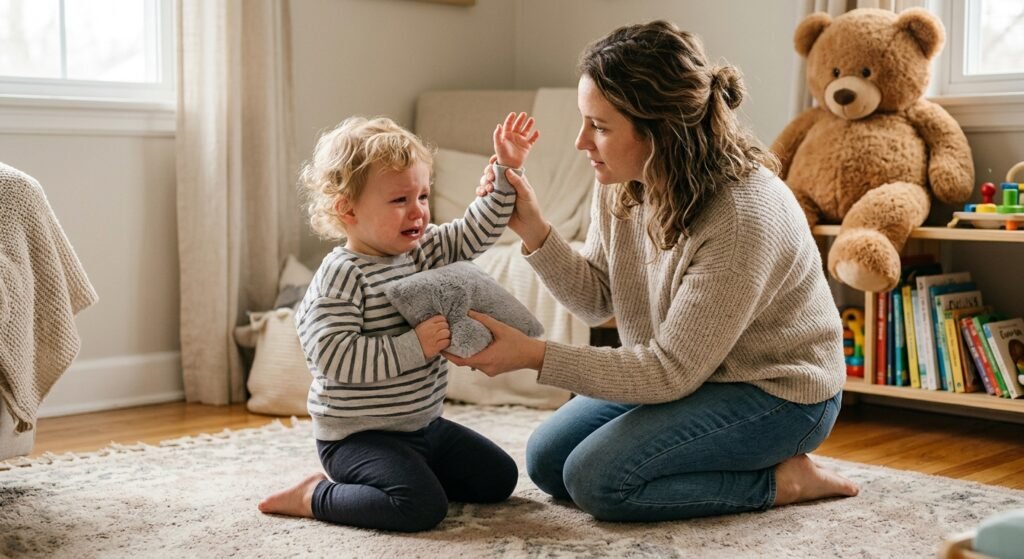
To stop toddler hitting, calmly block the hit, state a short firm rule ("I won’t let you hit"), name the feeling behind it and show your child what to do instead. Hitting is common in toddlerhood and can reflect frustration, excitement, exploration or limited impulse control. It does not define a child’s personality. This guide explains why toddlers hit and gives positive discipline strategies for hitting, whether your toddler is hitting parents or other children.
Why do toddlers hit?
Toddlers do not hit because they are "bad." Common reasons include:
- Big feelings, few words. Anger, frustration or jealousy come out through the body.
- Cause and effect experiments. "What happens if I hit Mum?" Your reaction is interesting data.
- Seeking attention. Even negative attention can feel better than none.
- Poor impulse control. The self-control parts of the brain are still developing.
- Overstimulation or tiredness. Harder to cope means more hitting.
- Excitement. Some toddlers hit when thrilled, as an overflow of energy.
- Copying. Toddlers imitate what they see at home, on screens or at childcare.
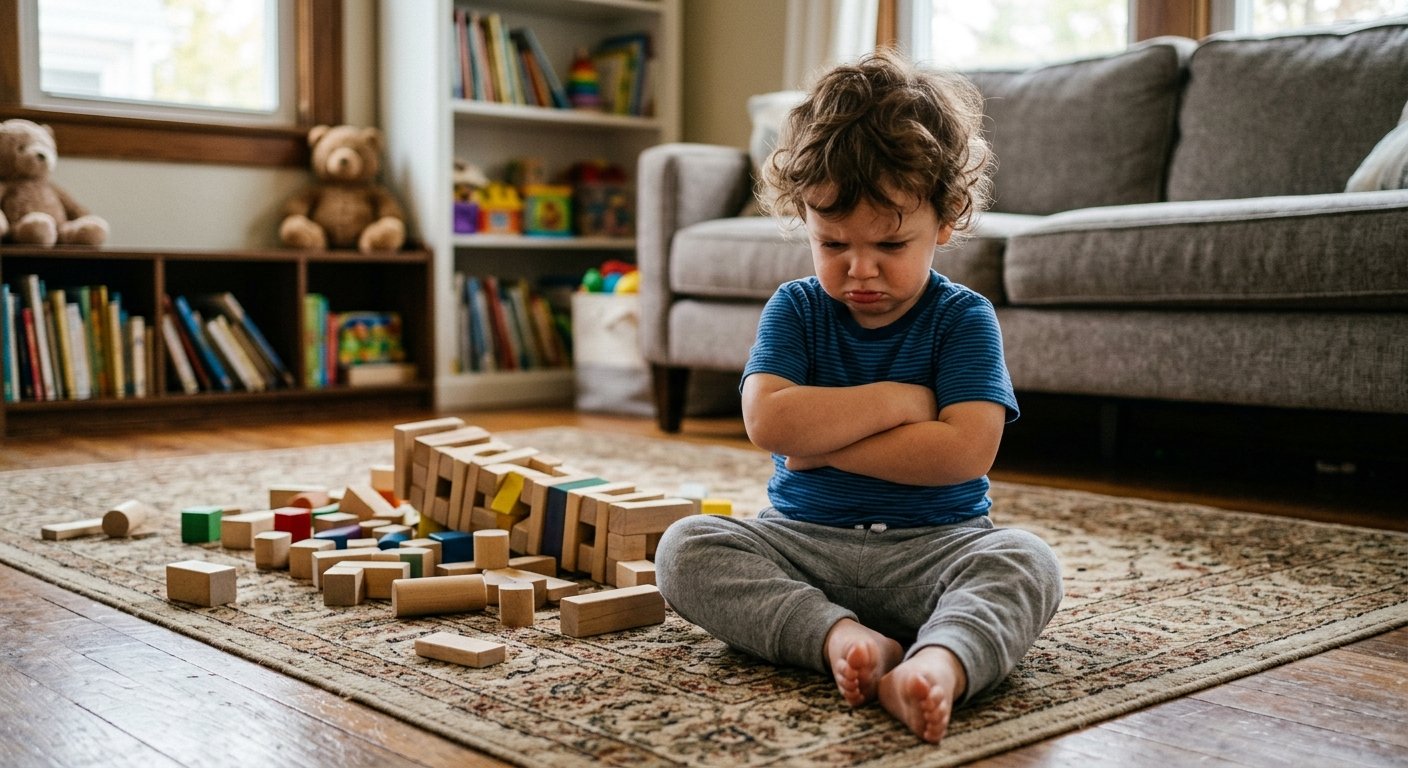
What not to do
- Do not hit back or smack. It teaches that hitting is how big people solve problems, and research links physical punishment with more aggression over time.
- Do not laugh. A giggle can accidentally turn hitting into a game.
- Do not shout or shame. "Bad boy!" does not teach what to do instead.
- Do not give a long lecture. Toddlers can only absorb a sentence or two.
5 steps to stop toddler hitting
- Block and stay calm. Move out of reach or gently block the hit. Use only the brief contact needed to prevent harm; do not grip tightly, restrain or pin your child down. Keep your face and voice calm.
- Use a short, firm rule. "No hitting. Hitting hurts." Say it the same way every time.
- Name the feeling. "You’re so mad that the block fell." This builds emotional vocabulary.
- Give an alternative. "You can say stop, ask for help, squeeze this cushion or stomp in a safe space."
- Follow through. If hitting continues, calmly end the activity or move to a quiet spot for a short break with you nearby. Stay nearby and resume teaching when your child is ready to listen; calming does not follow an exact timer.
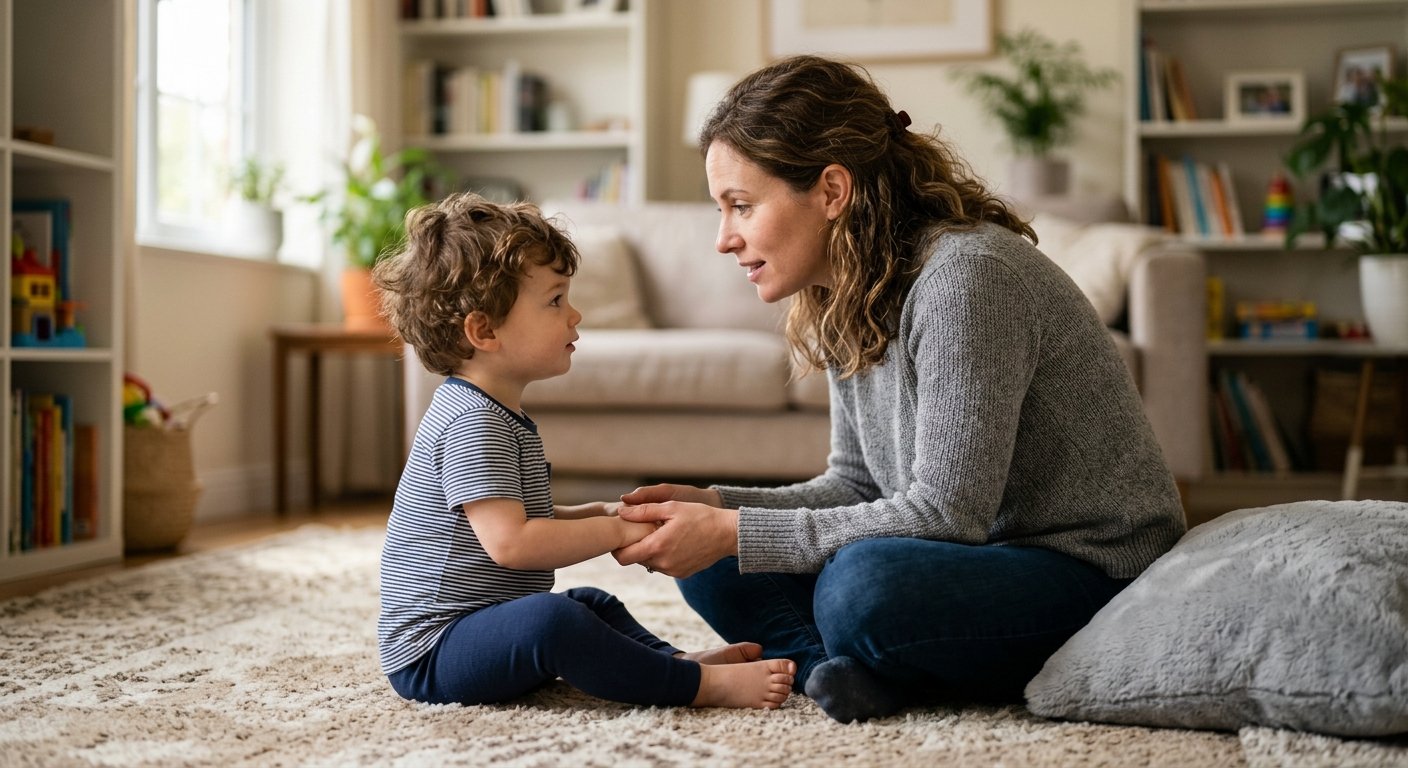
When your toddler is hitting parents
Hitting you can sting emotionally. Hitting alone does not tell you how secure your toddler feels. Look for triggers such as frustration, fatigue or difficulty communicating.
- Block the hit gently or move out of reach and say, "I won’t let you hit me."
- Create enough space to stay safe while remaining available to help your child calm.
- Return warmly once calm. A calm response and warm reconnection help teach safer ways to express feelings.
- Teach gentle touch: "Show me soft hands," and practise with a teddy together.
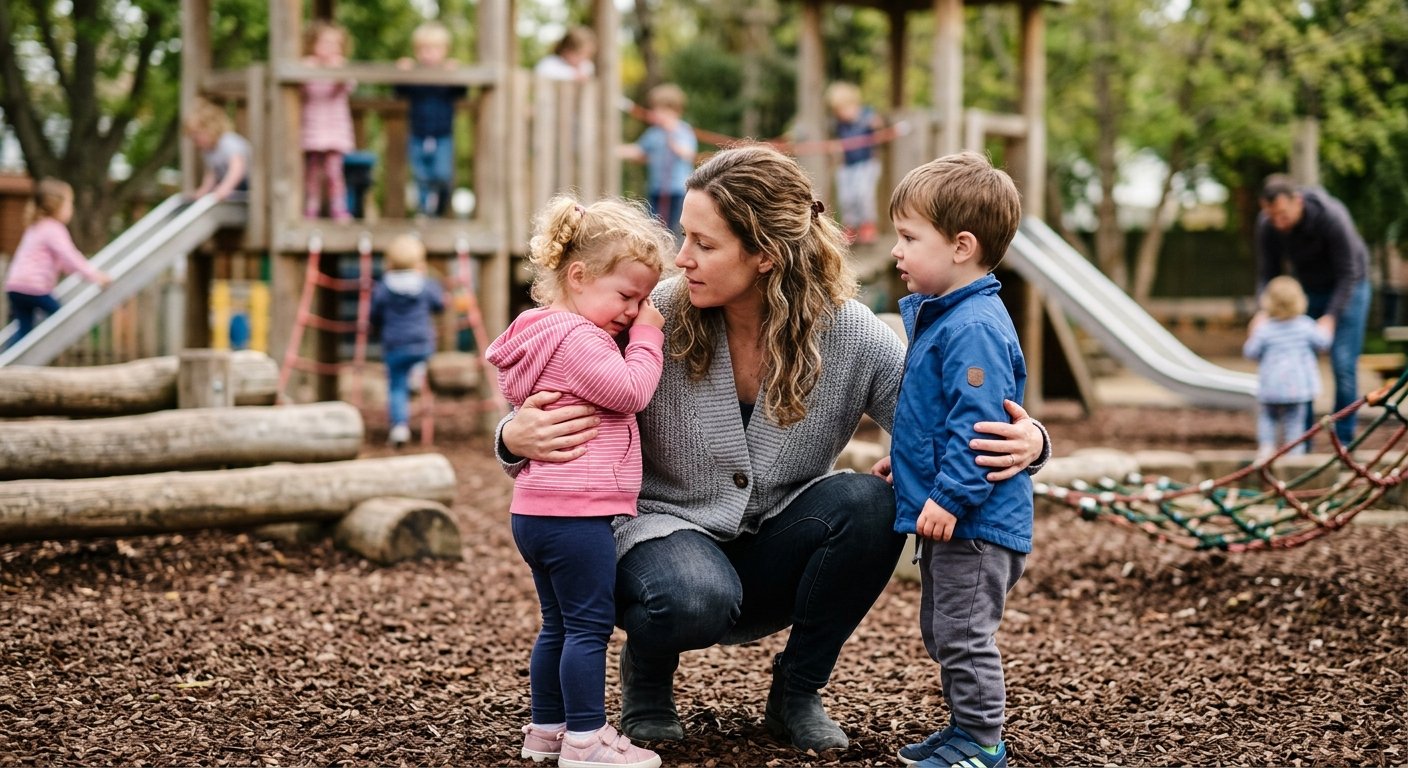
When your toddler is hitting other children
- Step in quickly and put yourself between the children.
- Check the hurt child first with a brief, caring comment, which also models empathy.
- State the rule to your child: "Hitting hurts. I won’t let you hit."
- Help repair in a way that suits their age: bringing a tissue, offering a toy or saying sorry with your help. Do not force a heartfelt apology, as young toddlers do not yet understand it.
- Leave if needed when your toddler is too worked up to play kindly.
- Look for patterns. Does it happen when toys are scarce, when your child is tired or when play is too rough? Adjust the situation.
Prevention: positive discipline strategies for hitting
- Praise gentle behaviour: "You touched the baby so softly. Great gentle hands!"
- Teach words and signs: "Mine," "stop," "help me" give children another option.
- Meet needs early: keep regular naps and snacks.
- Supervise play dates closely and keep them short.
- Model calm conflict. Children copy how you handle frustration.
- Give physical outlets: running, climbing, pushing and dancing release energy.
For wider principles, see our article on gentle parenting vs permissive parenting. If hitting happens during meltdowns, our guide to handling toddler tantrums explains how to respond.
When to seek advice
Occasional hitting can occur in toddlerhood, but it still needs a calm, consistent response. Ask your pediatrician for support if it is frequent, intense, worsening, causes injury, disrupts childcare or play, accompanies developmental concerns, or leaves you feeling unable to cope. You do not need to wait until a particular birthday to ask. Support is available, and you are not alone.
The takeaway
Hitting often becomes less frequent as language and self-control develop, with steady adult guidance. Progress varies, and persistent difficulties deserve support. Stay calm, say the rule, name the feeling, give an alternative and follow through every time.
Disclaimer: This article is general information, not medical advice.