
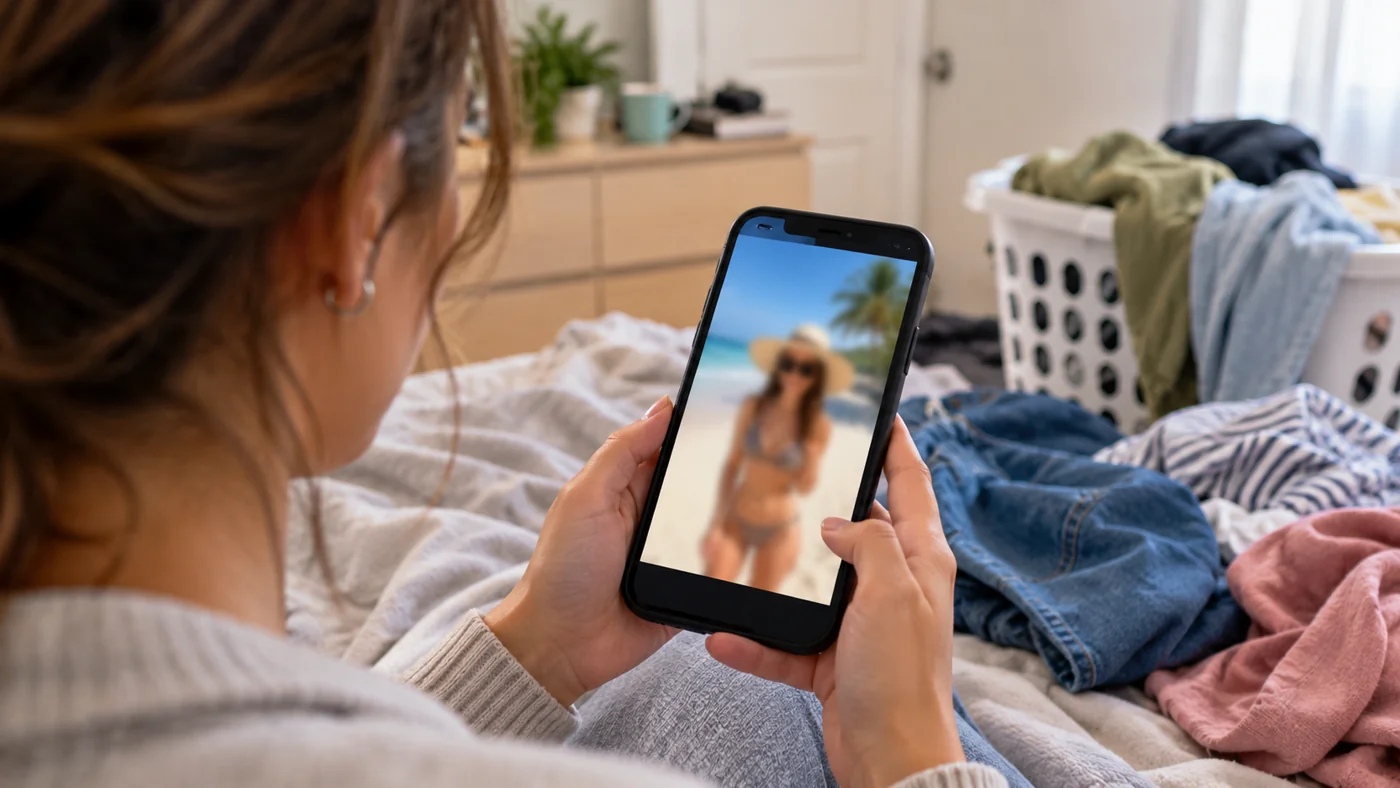
Social comparison on social media happens when you measure your own life against other people’s posts, and because those posts are often curated highlights, the comparison can leave you feeling worse. Comparing yourself to others online is a very human habit, but scrolling gives you hundreds of comparisons a day, often against the best moments of other people’s lives. This guide explains why social comparison on Instagram and other platforms affects mood, how curated social media lives mislead us and how to build a healthier relationship with your feed.
What is social comparison?
Psychologist Leon Festinger proposed social comparison theory in 1954: people judge their own abilities and worth by comparing themselves with others. Offline, we compared ourselves with a small circle such as classmates and colleagues. Online, the comparison group is huge, global and filtered.
There are two main directions:
- Upward comparison: comparing yourself with someone you see as better off, such as fitter, richer or more successful. It can inspire, but it often leaves people feeling inadequate.
- Downward comparison: comparing yourself with someone you see as worse off. It can feel comforting in the moment, but it is not a healthy basis for self-worth.
Why social media makes comparison worse
- Highlight reels. People post their best photos, achievements and holidays, not the arguments, boredom or bad hair days. You compare your behind-the-scenes with their highlights.
- Editing and filters. Photos are lit, posed, filtered and sometimes digitally altered, so the standard is not real.
- Constant exposure. A feed delivers an endless stream of other people’s wins, with no natural stopping point.
- Metrics. Likes, followers and views turn social worth into visible numbers.
- Algorithms. Feeds tend to show content that gets high engagement, which often means the most glamorous or dramatic.
- Reach beyond your circle. You compare yourself with influencers, celebrities and strangers whose lives bear no relation to yours.
What the research suggests
Studies on social media and wellbeing give mixed results, and the effects depend on how people use it. Many studies link passive scrolling and frequent upward comparison with lower mood, lower self-esteem and more envy, especially in teenagers and young adults and especially for appearance-focused content. Active, social use, such as chatting with close friends, tends to show weaker or even positive links. Because much of this research is correlational, it cannot prove that social media alone causes the problems, and results differ across people, content and contexts. The active-versus-passive distinction alone does not reliably predict how someone will feel.
Comparing yourself on Instagram: common triggers
- Appearance and body image, from fitness and fashion posts
- Relationships, engagements, weddings and pregnancies
- Careers, promotions and business wins
- Travel and lifestyle posts
- Parenting perfection, such as spotless homes and calm children
- Friends’ gatherings you were not invited to (sometimes triggering fear of missing out, or FOMO)
Signs that comparison is hurting you
- You feel worse about your body, home or life after scrolling.
- You check other people’s profiles repeatedly.
- You feel envy, resentment or shame.
- You hold back from posting because it will not measure up.
- You judge your day by likes.
- You struggle to feel happy for others.
How to stop comparing yourself to others online
1. Remember it is a curated picture
When you notice a pang, remind yourself: "This is a highlight, not the whole story."
2. Curate your feed
Mute or unfollow accounts that reliably leave you feeling worse. Follow creators who teach, inspire or make you laugh. Unfollowing is not unkind. It is feed hygiene.
3. Switch from passive to active use
Message a friend, comment on something real or join a hobby community, instead of scrolling silently.
4. Set limits
Use app timers and keep social media out of the first and last hour of the day.
5. Name the feeling
"I feel envious" is useful information. Ask what it points to: perhaps something you want, such as rest, travel or closeness.
6. Turn envy into a clue, not a verdict
If someone’s post stings, ask: "What do I actually want here, and what is one small step toward it?"
7. Practise gratitude and self-compassion
Noting three real things you value in your own life each day can shift attention. Treat yourself as you would a friend.
8. Compare yourself with your past self
Measure progress against where you were last year, not against a stranger.
9. Take breaks
A short pause can reset your perspective.
10. Invest in offline life
Time with people, movement, nature and hobbies give you real experiences that do not depend on an audience.

Can comparison ever be healthy?
Yes. Comparison can motivate us, show us what is possible and help us learn. The difference lies in whether it leaves you inspired and informed or smaller and stuck. Healthy comparison focuses on specific skills you can learn, not on your overall worth.
If it is affecting your mental health
If social media comparison is feeding anxiety, low mood, body image concerns or disordered eating, talk with a doctor or a mental health professional. A healthcare professional can help you find support suited to your needs.

For related support, read how to stop social media overwhelm and why you may feel lonely around people.
The takeaway
You are comparing your whole life with other people’s best moments. Curate your feed, notice the feeling and put real life back at the centre.
Disclaimer: This article is general information, not medical advice.