
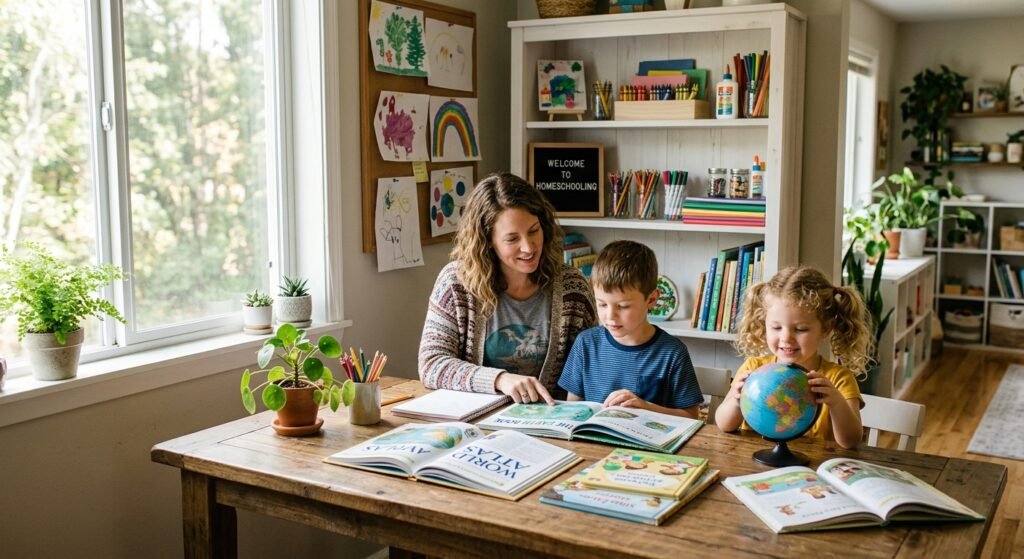
To start homeschooling, check your local legal requirements, decide why and how you want to teach, choose a curriculum approach, and build a simple daily rhythm you can adjust as you learn. It can feel overwhelming at first, but homeschooling for beginners is more manageable than it looks, with time, support and realistic expectations. This guide walks through the steps, from homeschool requirements to what your first year can look like.
Step 1: Understand your homeschool requirements
Legal rules differ widely, so this step comes first. In the United States, homeschooling is legal in all states, but each state sets its own rules. Requirements may include notices, attendance records, assessments, portfolios, required subjects or parent qualifications; the details depend on your state and the legal option you choose. Other countries range from very open to tightly regulated, and in a few, homeschooling is restricted.
- Search "[your state or country] homeschool laws" and read the education department’s official page.
- Check what notice, records, testing or subjects are required, and any deadlines.
- If your child is currently enrolled, follow the withdrawal process so they are not recorded as absent.
- Consider joining a local homeschool association, which often explains the rules clearly.
Rules change, so verify with an official source rather than relying on blog posts alone.
Step 2: Clarify your why
Families homeschool for many reasons: flexibility, a child’s learning needs, health, safety, travel, faith, or dissatisfaction with school options. Write down your goals. They will guide choices on curriculum, schedule and how structured your days should be, and they help on tough days.
Step 3: Learn the main homeschool approaches
There is no single right method. Common styles include:
| Approach | Core idea | Best for |
|---|---|---|
| Traditional / school-at-home | Structured textbooks, set schedule | Families wanting familiar structure |
| Classical | Learning in stages with a focus on language, logic and rhetoric | Reading-heavy, rigorous learners |
| Charlotte Mason | Short lessons, living books, nature study | Gentle, literature-rich learning |
| Montessori | Child-led, hands-on, prepared environment | Children who enjoy hands-on work and increasing independence |
| Unschooling | Learning follows the child’s interests | Self-directed, curious children |
| Eclectic | Mix and match what works | Families who want to combine methods |
These are starting points to explore, not rules about which method a child must use. Any approach must still meet your local education requirements.
Step 4: Choose curriculum and resources
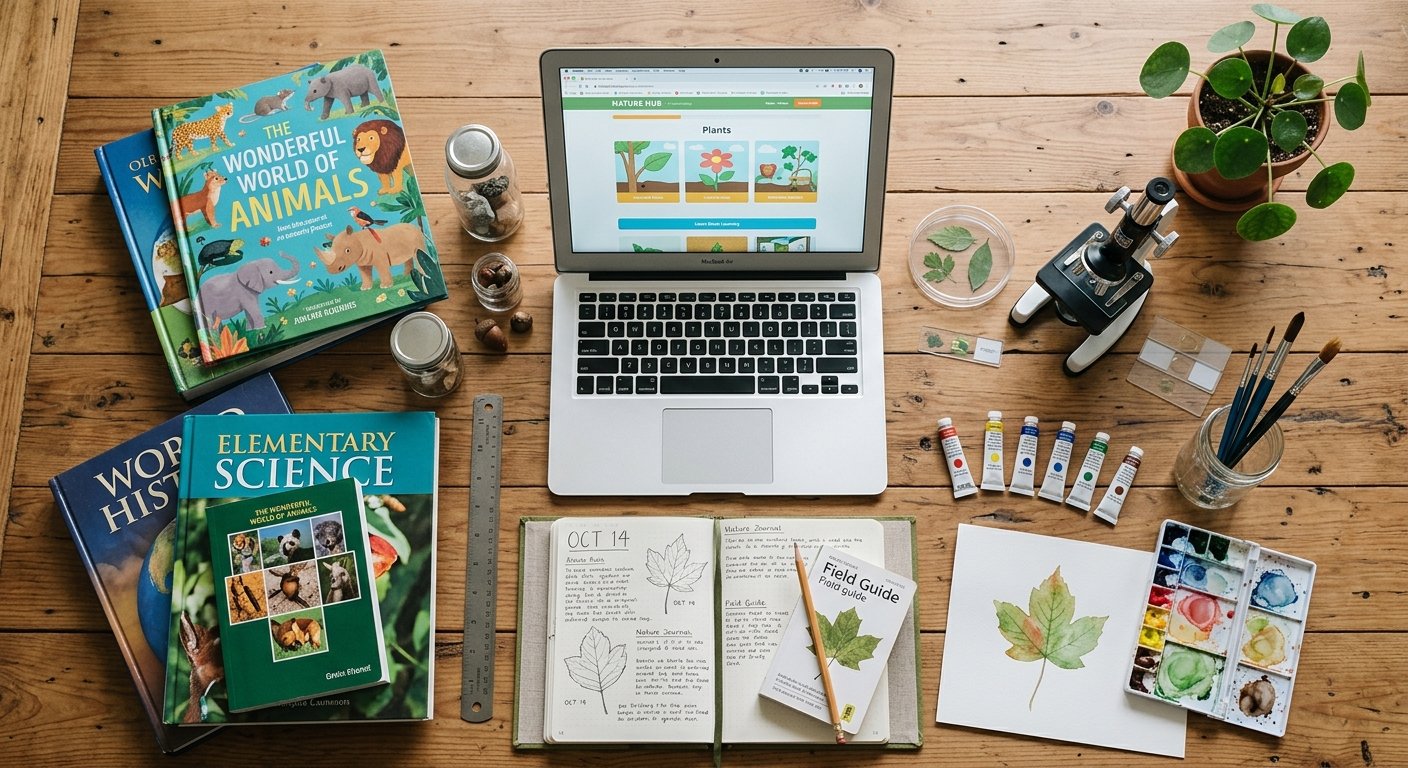
- Cover the basics: reading, writing, maths, science and social studies.
- Look for fit, not fame. Check samples, and consider your child’s current skills, interests and support needs and your own teaching energy.
- Mix sources: library books, online courses, educational videos, museums and co-ops.
- Start simple. Prioritise core skills while making sure every subject required in your jurisdiction is covered.
- Do not buy everything at once. Needs change after the first few months.
Step 5: Build a simple daily rhythm
Home learning can use time differently from a school classroom, but there is no universal number of hours that suits every child. Plan for your child’s age, learning goals and support needs, and meet any local requirements for instructional time, attendance and subjects. Mix focused lessons with reading, projects, movement and breaks.
A sample rhythm might be:
- Morning: reading and maths (focused work)
- Mid-morning: break and outdoor play
- Late morning: science, history or a project
- Afternoon: free reading, hobbies, outings, chores
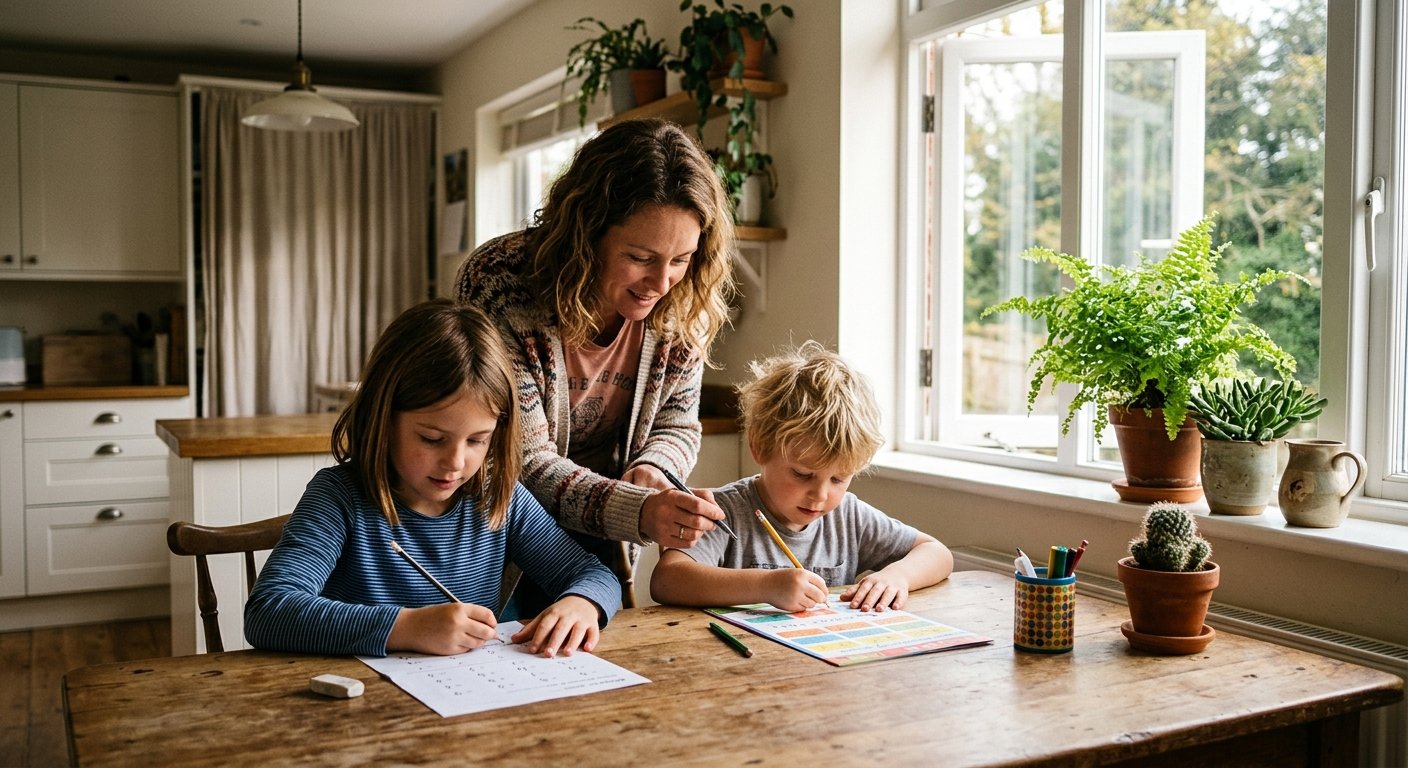
Focus on a predictable routine rather than a rigid timetable.
Step 6: Keep simple records
Even where not required, records help. Keep a log of subjects covered, a reading list, samples of work and photos of projects. If your region requires reports or portfolios, you will already have what you need.
Step 7: Find community
Social connection takes intentional planning, particularly if transport, cost or local availability limits your options. Options include homeschool co-ops, sports teams, library programmes, music or art classes, scouts, volunteering and park meetups. Online and local groups also offer advice on curriculum and rules.
What first year homeschooling really looks like
- Expect an adjustment period. If your child has been in school, some families find a gradual transition helpful, using reading, conversation and exploration while building new routines. Continue to meet compulsory education and attendance requirements throughout the transition.
- Expect to change things. Dropping a curriculum that does not work is normal.
- Expect hard days. Burnout is real. Plan breaks and use flexibility.
- Look after yourself. Keep time for your own rest and interests.
Common beginner questions
Do I need to be a teacher?
A teaching licence is not always required, but parent qualifications and other conditions vary by jurisdiction and legal route. Confirm the current rules with your education authority before withdrawing your child. Many resources are designed to support parents without teaching experience.
What about cost?
Costs range from very low (library and free online resources) to thousands per year for packaged curricula.
Can I work and homeschool?
Many families do, using flexible schedules, shared teaching or co-ops, though it takes planning.
The takeaway
Starting is the hardest part. Learn your local rules, choose a simple approach, begin with a light routine and adjust as you go. Your first year is for learning what works for your family.
Disclaimer: This article is general information, not legal advice. Check your local education authority for current rules.
Related reading
- Homeschooling a child with an IEP, 504 plan or special needs
- The impact of independent learning on children
Official resources for checking homeschool requirements
These examples show why local verification matters. They are not a complete guide to the rules in every state or country.