
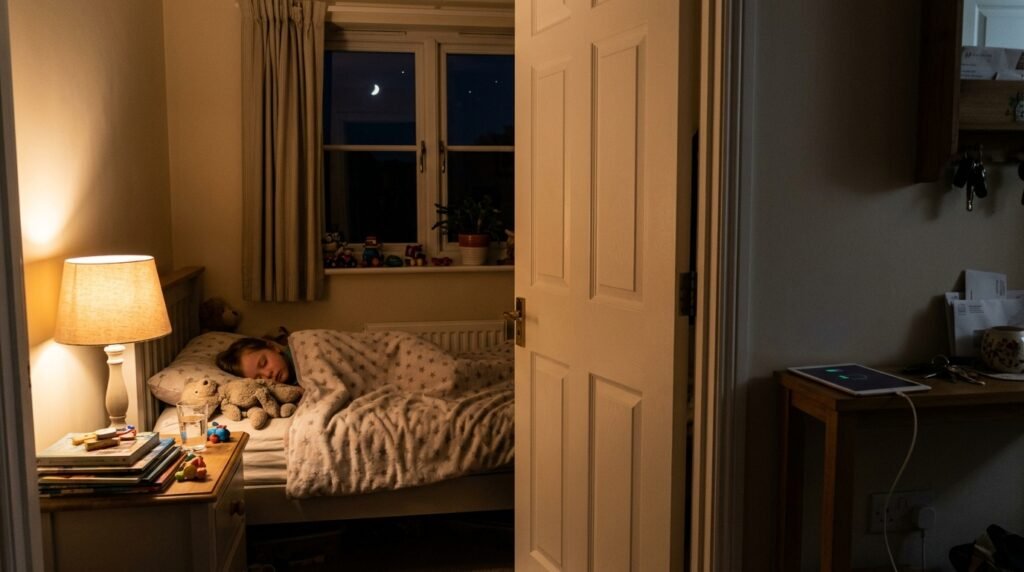
Screen time and sleep in children are closely linked: more screen use, especially in the evening and in the bedroom, is associated with later bedtimes, less sleep and poorer sleep quality. The reasons go beyond blue light, and the good news is that simple bedtime screen habits make a real difference. This guide explains how screens before bedtime affect kids’ sleep, what the evidence says about blue light and what to do about it.
How much sleep do children need?
The American Academy of Sleep Medicine recommends these ranges per 24 hours, including naps:
| Age | Recommended sleep |
|---|---|
| 1–2 years | 11–14 hours |
| 3–5 years | 10–13 hours |
| 6–12 years | 9–12 hours |
| 13–18 years | 8–10 hours |
Sleep supports growth, mood, learning, memory and immune health. Chronic short sleep is linked with attention problems, irritability and difficulties at school.
How screens affect children’s sleep
Research points to several pathways:
- Displacement. Time on screens replaces sleep. "Just one more episode" pushes bedtime later.
- Stimulating content. Exciting games, action videos and social media can raise alertness, heart rate and emotions when children need to wind down.
- Light exposure. Evening light, including from screens, can delay the body’s internal clock and reduce the sleep hormone melatonin.
- Interruptions. Notifications, messages and the pull to check devices can wake children at night.
- Social pressure. For older children and teens, fear of missing out can keep them online late.
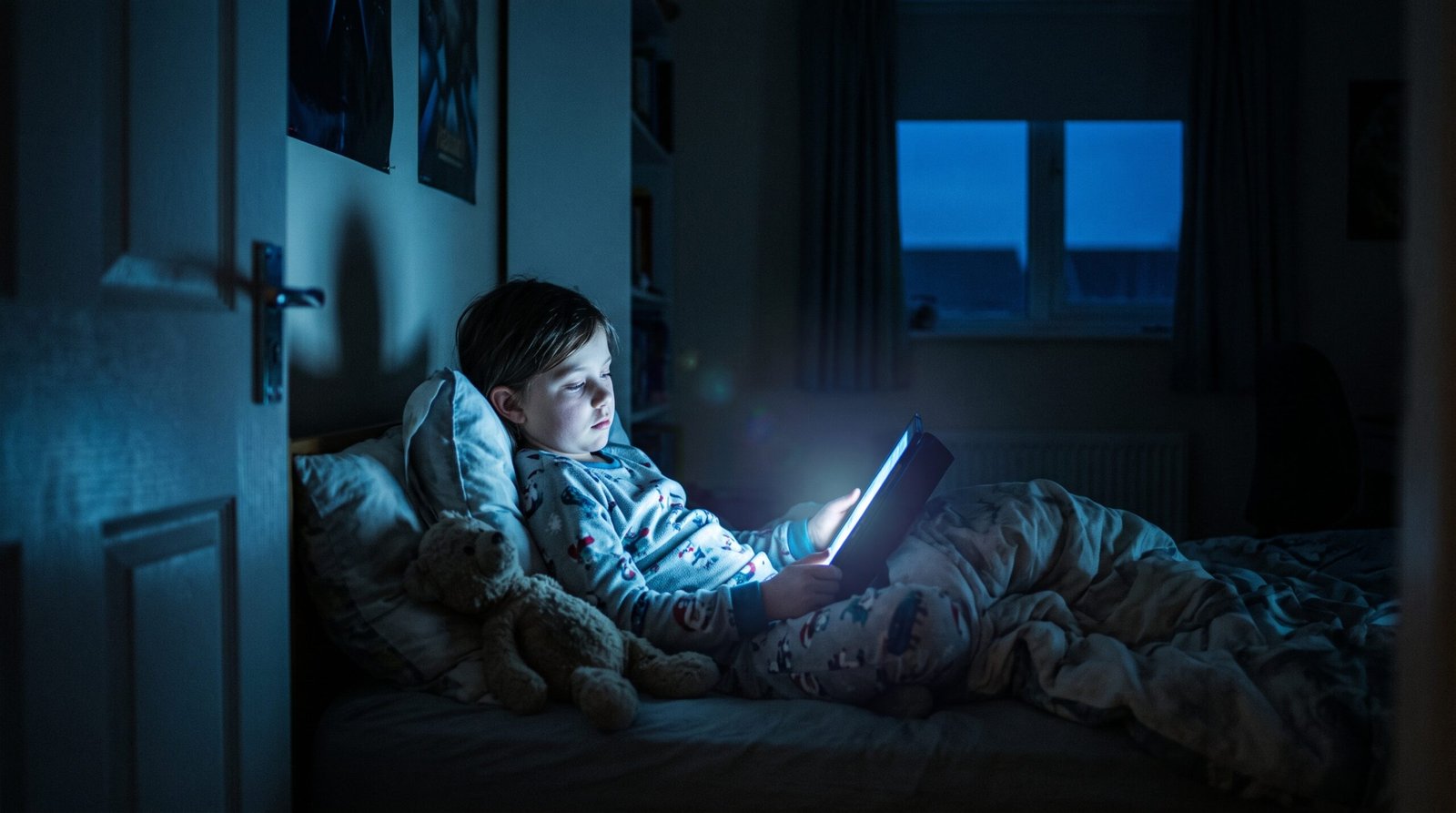
Studies in children and teens consistently link bedtime device use, and having a device in the bedroom, with shorter and later sleep.
Blue light and kids’ sleep: what’s the real story?
Blue light (short-wavelength light) suppresses melatonin more strongly than other colours, and children’s eyes may be more sensitive to light than adults’. That is why night modes and blue-light filters are popular. Light is only one part of the picture: stimulating content, notifications and delayed bedtime matter too. Night modes and blue-light glasses should not be treated as substitutes for a screen-free wind-down. Evidence for sleep benefits from these products is limited and does not justify promising a fix for children’s sleep.
Signs screens may be hurting your child’s sleep
- Difficulty falling asleep or long bedtime battles
- Tiredness, grumpiness or trouble waking for school
- Falling asleep in class or during the day
- Difficulty focusing or worsening grades
- Using a device in bed, or waking to check it
Healthy bedtime screen habits
- Set a screen curfew. AAP guidance recommends avoiding screens for about an hour before bedtime.
- Keep devices out of the bedroom. Charge phones, tablets and consoles in a shared space overnight.
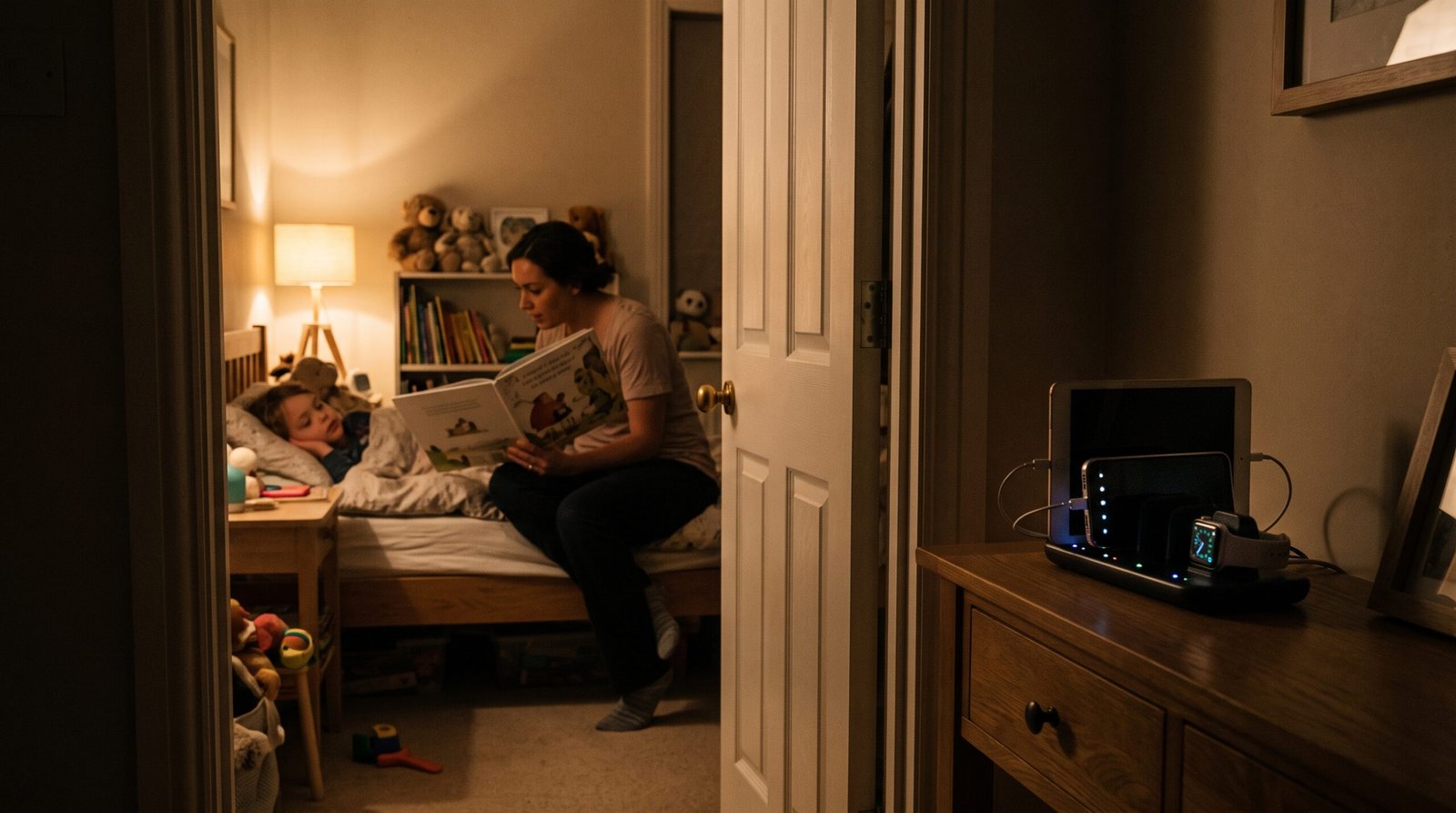
- Create a calming routine. Bath, pyjamas, teeth, book and a cuddle or quiet music signal sleep.
- Choose calming content earlier in the evening. Avoid scary, fast-paced or competitive games late in the day.
- Use dimmer lights. Lower the lights in the home in the hour before sleep.
- Keep a consistent schedule. Regular bed and wake times, even at weekends, support the body clock.
- Get daylight and exercise. Morning light and daily activity help children sleep better.
- Model it. Put your own phone away at night.
Age-specific tips
- Toddlers and preschoolers: avoid screens as a way to settle. Use stories, songs and cuddles.
- School-age children: give a clear screen-off time, use a visual timer and offer audiobooks for winding down.
- Teens: discuss why sleep matters, agree on a phone curfew together, and use "do not disturb" mode overnight.
If your child needs a screen to fall asleep
Break the habit gradually. Move the screen-off time earlier by 10–15 minutes every few days, replace it with audio stories or music at low volume, and stay consistent. Expect a few rough nights.
For more on setting limits, read our guide to reducing screen time for kids.
When to talk to a doctor
Talk to your pediatrician if your child snores loudly, has pauses in breathing, has persistent insomnia, nightmares or night terrors, or is excessively sleepy in the day despite enough hours in bed. Sleep problems can have medical causes that screen changes will not solve.
The takeaway
Screens affect children’s sleep mainly by delaying bedtime, stimulating the brain and tempting night-time use. Switch screens off before bed, keep devices out of bedrooms and build a calm routine for better rest.
Disclaimer: This article is general information, not medical advice.