

To reduce phone usage, track what you actually do, remove the triggers that pull you in and put friction between you and your most tempting apps. Willpower alone rarely works against a device built to hold your attention, so the best strategies change your environment and routines. This guide covers why it is so hard to stop checking your phone, how smartphone habits form and 12 practical ways to reduce screen time as an adult.
Why it is so hard to stop checking your phone
- Variable rewards. You never know whether the next check will bring a message, a like or nothing, which makes checking compelling.
- Notifications. Pings and badges are designed to pull your attention back.
- Habit loops. A cue (boredom, a quiet moment, waiting in a queue) triggers a routine (picking up the phone) and a small reward (novelty).
- Infinite feeds and autoplay. There is no natural stopping point.
- Emotional soothing. Many of us reach for the phone to avoid boredom, stress or loneliness.
- Social pressure. Messages and work chats create an expectation of being always available.
This does not mean you lack discipline. It means you are using a product engineered for engagement. See also our article on dopamine detox for what is, and is not, going on in the brain.

Step 1: Know your baseline
Check Screen Time (iPhone) or Digital Wellbeing (Android) for a week. Note total time, the number of pickups and your top apps. Then note when you reach for the phone, and how you feel before and after.
12 ways to reduce phone usage
1. Decide your why
More time with family? Better sleep? Less anxiety? A clear reason makes it easier to stick with changes.
2. Turn off non-essential notifications
Keep calls, messages from real people and essential alerts. Turn off badges, banners and promotional pings for social media, news and shopping.
3. Move distracting apps
Move social, news and games off your home screen, or into a folder on the last page. The extra tap gives you a moment to choose.
4. Set app limits
Use built-in screen time tools to set daily limits on your biggest time sinks. Treat the limit as a boundary, not a suggestion.
5. Use grayscale or a simpler display
Colour is part of what makes apps enticing. Switching to grayscale in accessibility settings makes the phone less rewarding to stare at.
6. Keep the phone out of reach
Charge it outside the bedroom, and leave it in another room while you work, eat or spend time with people. Out of sight really does help.
7. Create phone-free times and zones
For example, the first hour after waking, meals, the hour before bed and the bedroom. For guidance on bedtime routines in families, see screen time and sleep in children.
8. Replace the habit
When you notice the urge, do something else for two minutes: stretch, sip water, look out of the window, read a page or message a friend.
9. Use a watch or alarm clock
A wristwatch and an alarm clock remove two common reasons for picking up the phone.
10. Batch your checking
Decide on set times for email and social media rather than checking all day. Even three checks a day can be enough.
11. Delete or log out of the worst offenders
If an app regularly leaves you feeling worse, delete it or use it only on a computer. See social media break benefits.
12. Tell someone
Share your goal with a friend or family member, or set a family challenge. Accountability helps.
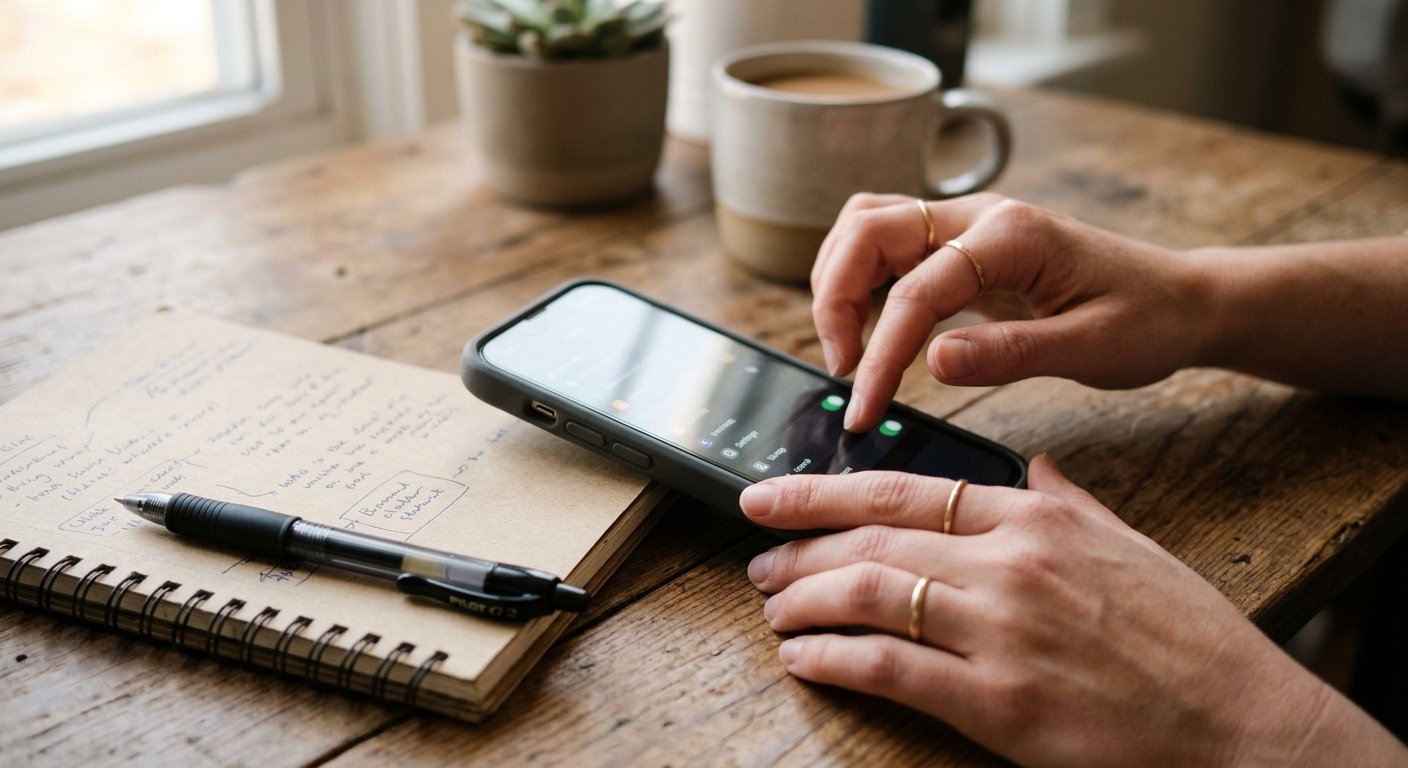
Reduce screen time for adults at work
- Keep your phone face down or in a drawer during focused work.
- Use a computer for messaging apps and turn off the phone versions.
- Use "Focus" or "Do Not Disturb" modes with exceptions for key contacts.
- Try 25-minute focus blocks followed by a short break.
If your work requires being reachable, agree on ways people can contact you for urgent matters.
What to do when you slip
You will have days when it does not go to plan. That is normal. Notice it without blame, ask what triggered it and try again. Shame tends to make the habit stronger.
When phone use is more than a habit
If your phone use is damaging your sleep, work, relationships or mood, or you feel unable to cut back despite wanting to, talk to a doctor or therapist. Problematic smartphone use is not a formal diagnosis, but it can occur alongside anxiety, depression or ADHD, and help is available.

The takeaway
You do not need to give up your phone, just stop letting it set your day. Track your use, turn off triggers, create phone-free spaces and swap the habit for something you value.
Disclaimer: This article is general information, not medical advice.