
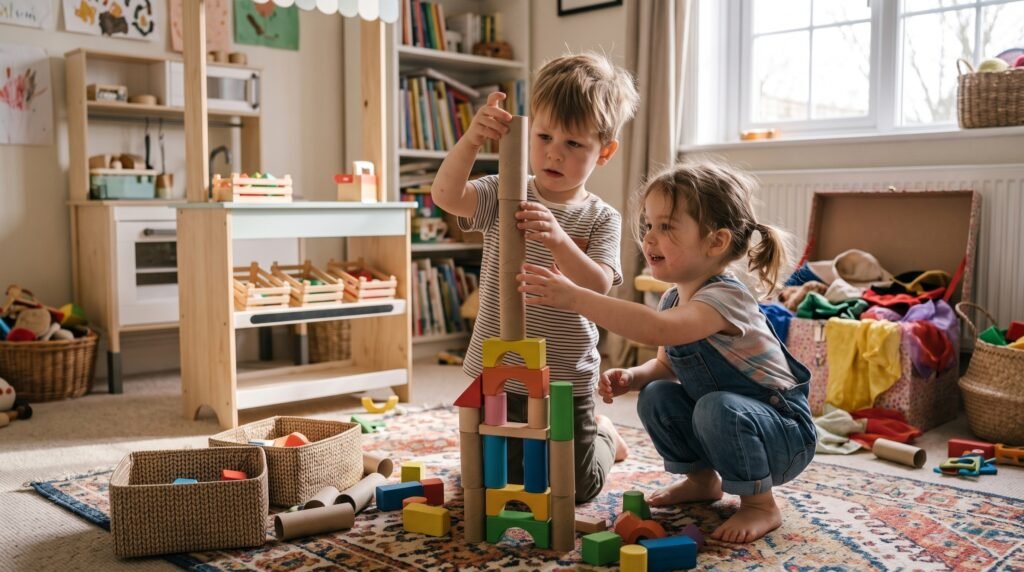
Play based learning activities teach children real skills, from language and maths to focus and problem-solving, through fun, hands-on experiences instead of drills. Learning through play is not a lazy alternative to "proper" teaching: research in early childhood education consistently links playful, child-led learning with stronger language, social and thinking skills in the early years. Below you will find what play based learning is, why it works and practical play based learning examples and preschool play activities you can try at home.
What is play based learning?
Play based learning is an approach where children explore, experiment and create in ways that interest them, while adults set up the environment, join in and gently extend the learning. It ranges from free play (child-led, with no set outcome) to guided play (adult-framed with a learning goal, but still playful).
Why learning through play works
- Language: pretend play and storytelling build vocabulary and conversation.
- Maths: counting, sorting, comparing and measuring come up naturally.
- Social skills: play involves taking turns, negotiating and understanding others’ feelings.
- Emotional skills: children work through feelings and fears through pretend scenarios.
- Executive function: planning, remembering rules and controlling impulses are practised in games.
- Motivation: children who enjoy learning stay curious.
- Physical development: active play builds strength, coordination and fine motor skills.
Play based learning examples by skill
Early maths
- Shop play: pretend to buy and sell, counting "coins" and items.
- Sorting treasure: sort buttons, stones or leaves by colour, size or shape.
- Cooking together: measure, pour and count ingredients.
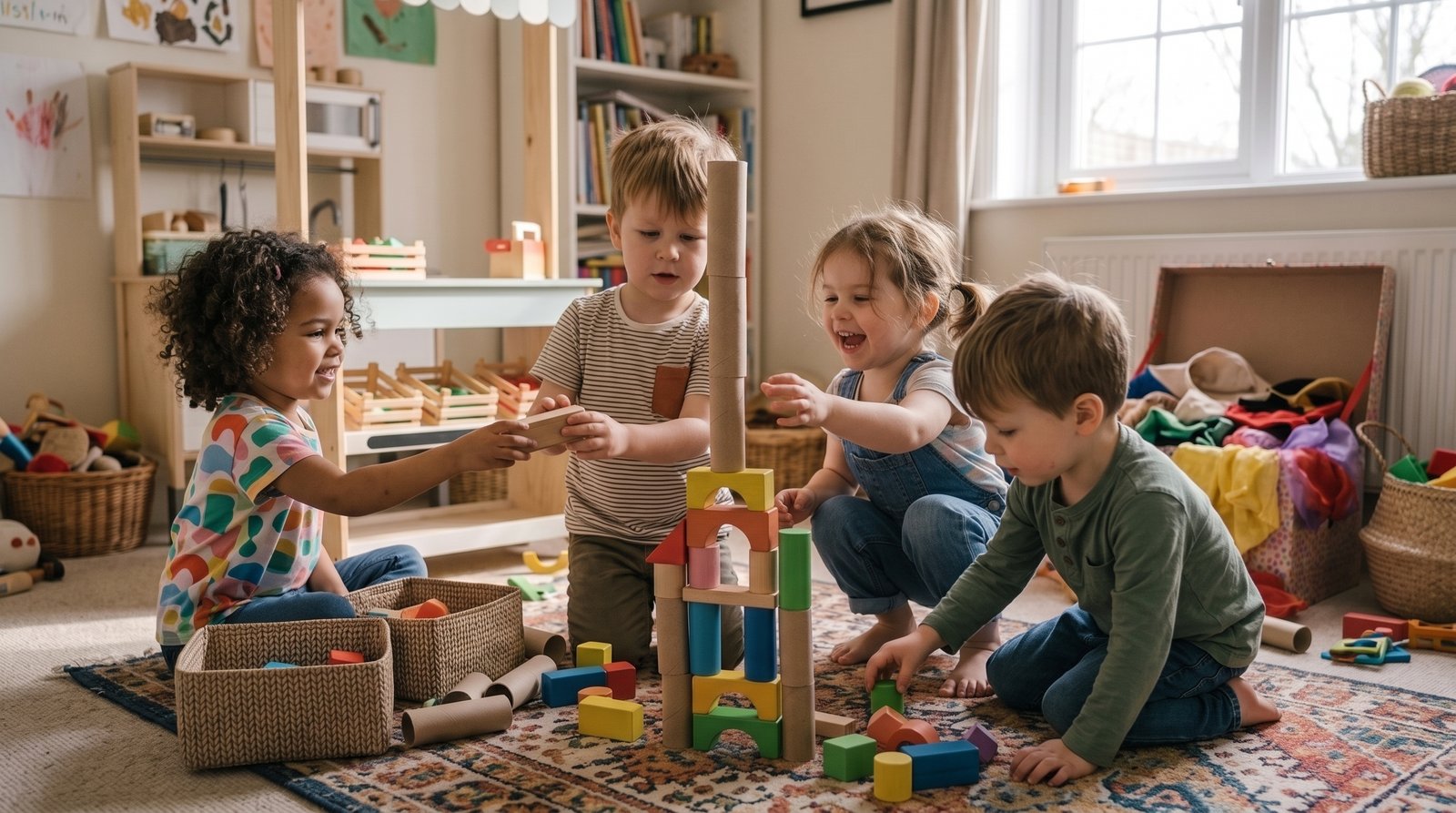
- Block building: explore shapes, balance, height and patterns.
Early literacy
- Story stones or puppets: retell familiar stories or invent new ones.
- Letter hunts: find letters on signs, cereal boxes or in books.
- Sensory writing: trace letters in sand, shaving foam or salt trays.
- Pretend restaurant: write menus and orders with scribbles or letters.
Science and curiosity
- Sink or float: test household objects in a tub of water.
- Nature walks: collect, compare and sort natural items.
- Mixing and melting: ice play, colour mixing with water and food colouring.
- Gardening: plant seeds and watch them grow.
Creativity and imagination
- Dress-up and role play: doctor, builder, chef or explorer.
- Loose parts play: cardboard boxes, fabric scraps, tubes and lids to invent with.
- Art with process focus: painting, collage and playdough, with no "right" result.
- Music and movement: simple instruments, dancing and freeze games.
Gross motor play
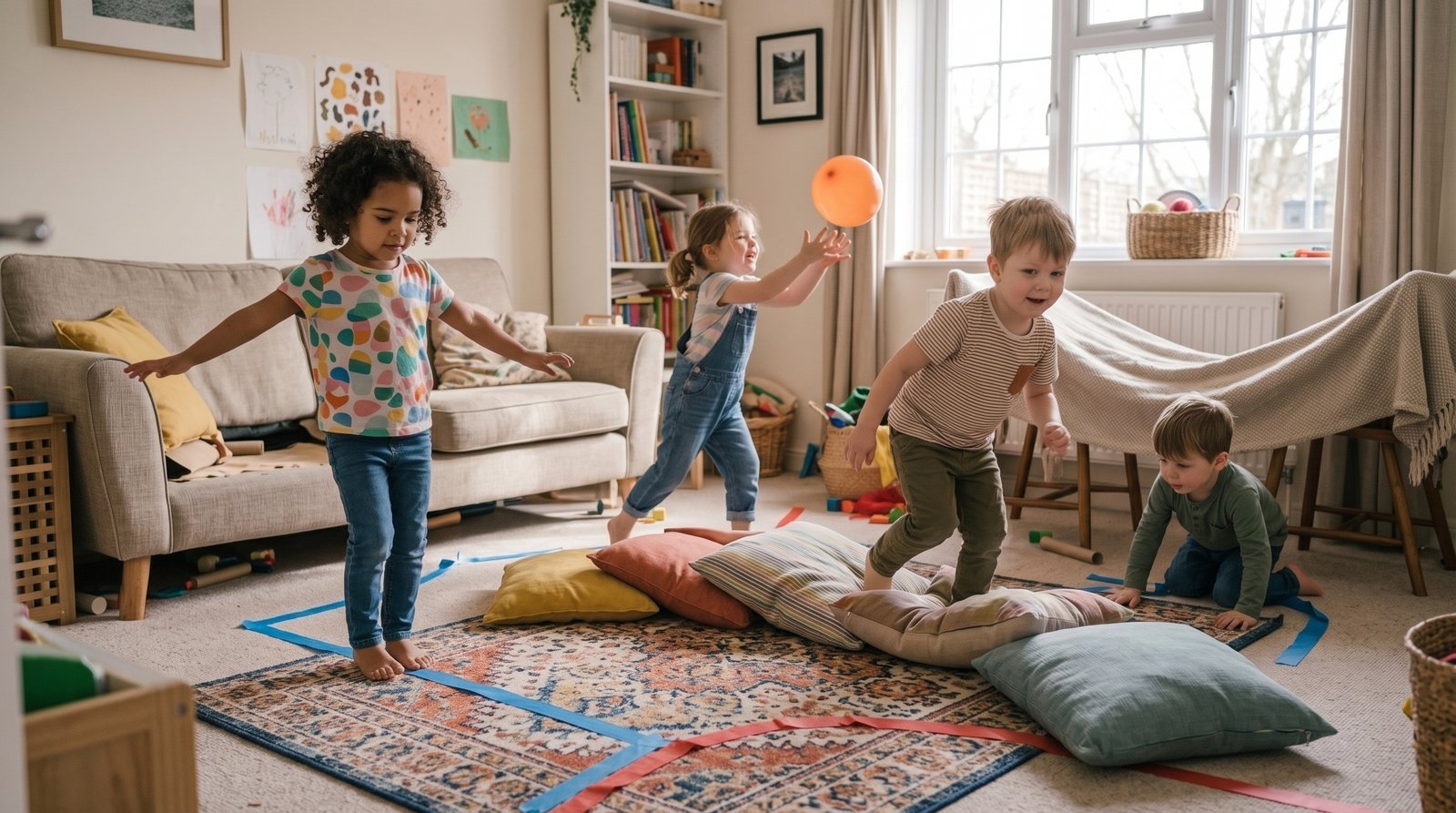
- Obstacle courses with cushions and tape
- Balloon games, ball games and hopscotch
- Climbing, balancing and playground play
Preschool play activities you can do in 10 minutes
- Treasure basket: fill a basket with safe household items to explore and describe.
- Colour hunt: "Find something red!" around the house or garden.
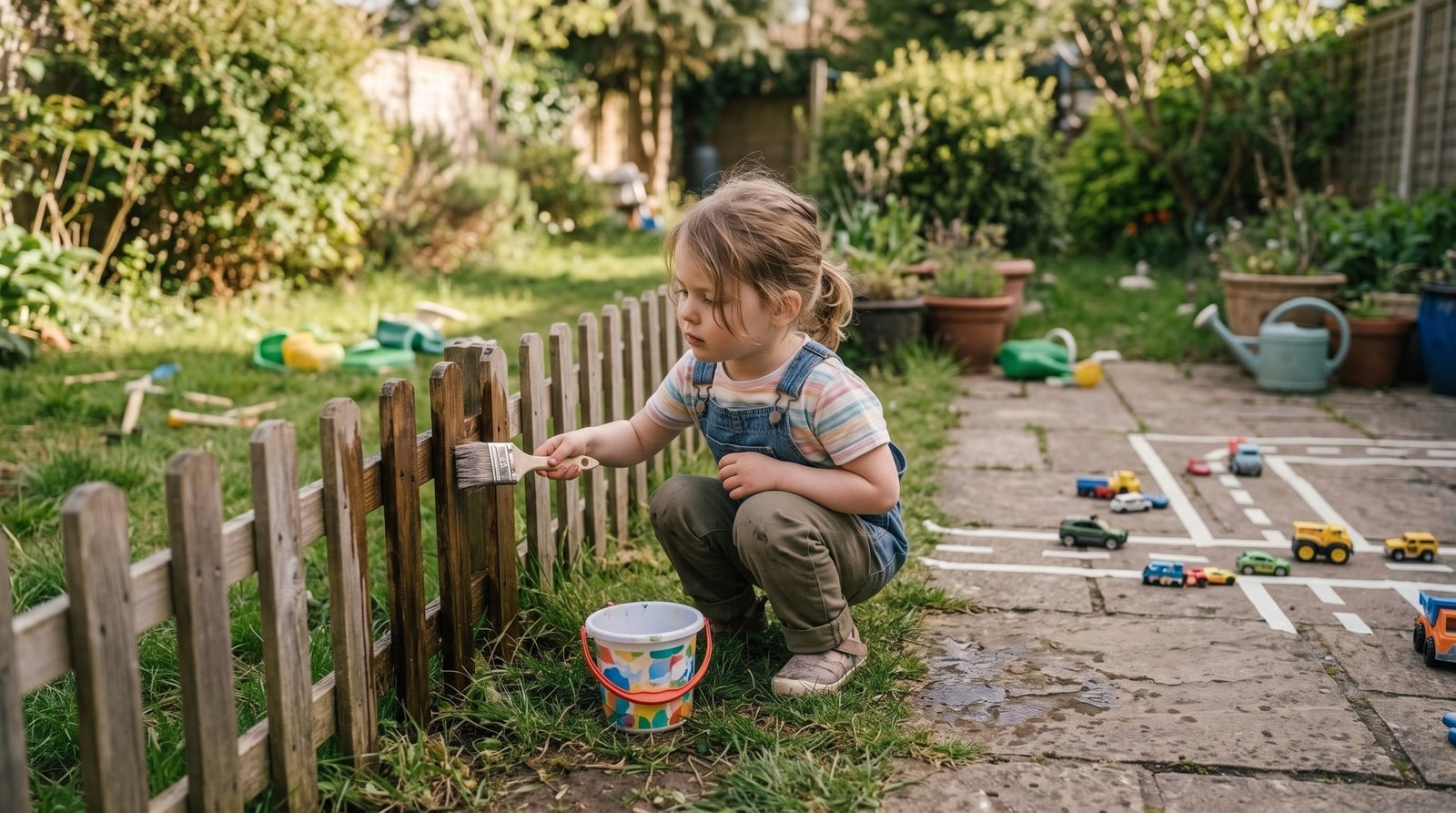
- Water painting: brushes and water on pavement or a fence.
- Tape roads: masking tape roads on the floor for toy cars.
- Pillow fort: build, plan and decorate together.
- Animal parade: move like different animals while naming them.
How to support play without taking over
- Set the stage. Provide open-ended materials and uninterrupted time.
- Follow your child’s lead. Join their game instead of redirecting it.
- Ask open questions. "What happens if…?" or "How could we…?"
- Use rich language. Introduce new words in context.
- Let them struggle a little. Problem-solving builds resilience.
- Allow mess and boredom. Boredom often leads to the most creative play.
What about academics?
Play does not mean avoiding learning. It means building the foundation. Children who learn through play still learn letters and numbers, and often with more understanding. Guided play, where adults gently steer toward a goal, can be especially effective for early literacy and maths. For structured approaches, see our guides on Montessori at home and how to start homeschooling.
The takeaway
Play is how young children make sense of the world. With simple materials, time and an engaged adult, everyday play becomes powerful learning.
Note: Choose age-appropriate materials. Keep small objects and balloons away from young children because of choking risks, and closely supervise water and craft activities.