
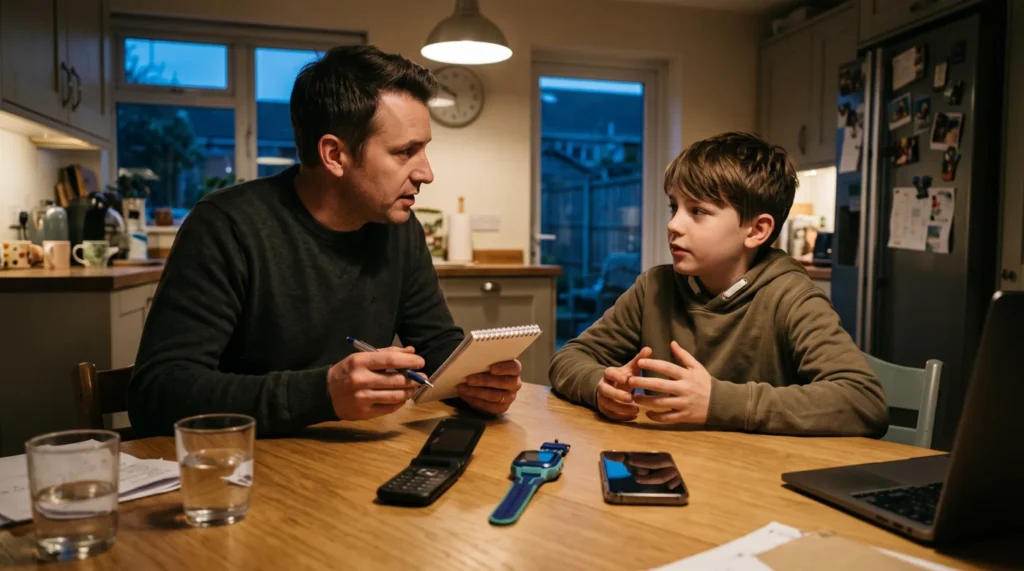
There is no single right age for a first phone: readiness matters more than birthdays. Many children in the US get their first smartphone around age 11 to 12, but that is not a recommended age for every child. Expert guidance emphasises individual readiness, family needs and starting with a basic phone or a limited device when that is a better fit. This guide helps you decide the best first smartphone age for your family, check whether your child is ready for a phone and set phone rules for kids that actually work.
Why there is no magic age
The American Academy of Pediatrics summarises research showing that many children get a first smartphone around age 11, while emphasising that there is no single age that works for everyone. Some groups of parents and pediatric experts advocate delaying smartphones, and social media, until at least the early teens, citing concerns about sleep, attention, social comparison and online risks. Others point out that phones bring safety, independence and connection benefits. The evidence on harms varies in strength and depends on how the phone is used. A sensible approach is to match the device to your child’s maturity and family needs.
Is my child ready for a phone? A checklist
Ask yourself:
- Need: do they walk or travel alone, or move between two homes? Do you need to reach them?
- Responsibility: do they look after belongings, charge devices and follow household rules?
- Self-control: can they stop screen activities when asked without major meltdowns?
- Judgement: do they understand not to share personal information or photos, and do they tell you about upsetting experiences?
- Emotional maturity: can they handle conflict, unkindness or exclusion in messages?
- Existing habits: are sleep, homework and activity already balanced?
- Your readiness: are you able to set up controls, monitor and have regular conversations?

If you tick most boxes, they may be ready. If not, consider waiting or choosing a simpler option.
Alternatives to a smartphone
- Basic or "dumb" phone: calls and texts only.
- Smartwatch phone: calls, texts and GPS with a limited contact list.
- Locked-down smartphone: parental controls, restricted apps and no social media.
- Shared family device: a tablet or old phone at home for specific uses.
Many families begin with a limited device and move to a full smartphone later.
Pros and cons at a glance
| Benefits | Risks |
|---|---|
| Easy contact and location sharing | Distraction and less focus |
| Independence and responsibility | Sleep disruption and late-night use |
| Maintaining friendships | Cyberbullying and social comparison |
| Educational tools | Exposure to harmful content and strangers |
| Emergency access | Pressure to be constantly available |
Phone rules for kids: build a family agreement
Write a short phone contract together. It sets expectations and avoids arguments later. Include:

- Phone-free times: meals, homework, one hour before bed.
- Phone-free places: bedrooms overnight (charge in a shared spot), bathrooms.
- Privacy rules: no sharing of address, school or passwords except with parents.
- Apps and downloads: parent approval required.
- Social media: wait until a set age, and review settings together.
- Respect: be kind, and do not send hurtful or private images.
- Spot checks: be honest that you may occasionally review the phone, within what suits their age.
- Consequences: agree what happens if the rules are broken.
- Ownership: you may set limits and take the phone if rules are broken.
- Review: update rules as your child grows.
Set up the phone before handing it over
- Turn on parental controls and screen time limits.
- Set privacy to the strictest options and turn off location sharing on apps.
- Disable in-app purchases and auto-downloads.
- Choose a passcode you both know.
- Set a nightly downtime schedule.
- Install only approved apps.

Delaying social media
Phones and social media do not have to come together. Many platforms set age requirements, which can vary by service and country. Check the current rules before creating an account; meeting a minimum age does not establish individual readiness. Consider a gap between getting a phone and opening accounts, and introduce one app at a time with supervision. For more, see online safety for kids.
When your child says "everyone has one"
Acknowledge the feeling, explain your reasons calmly and offer a middle path, such as a basic phone or a review date. Coordinating with other parents or schools on shared norms can ease the pressure.
For practical household routines, see our guides to reducing screen time for kids and screen time and sleep in children.
The takeaway
The right time for a first phone depends on your child’s maturity, your family’s needs and the type of device. Start small, set clear rules and keep talking as you gradually widen independence.
Disclaimer: This article is general information, not professional advice.