
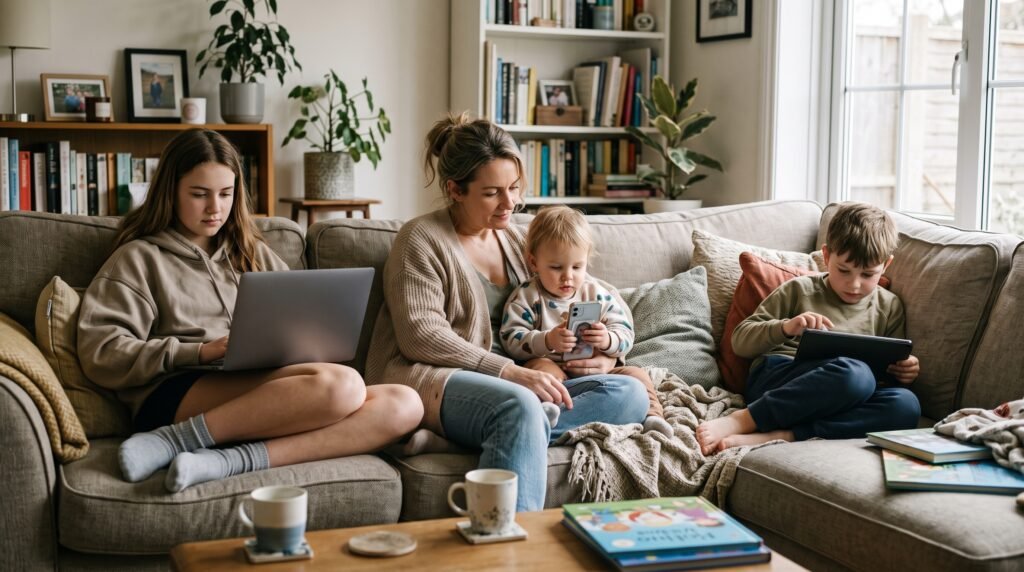
Screen time guidance varies by age and organization. The World Health Organization (WHO) advises against sedentary screen time for children under 2 and recommends no more than one hour a day for ages 2 to 4. The American Academy of Pediatrics (AAP) emphasizes age-appropriate content, shared use and protecting sleep, play and family time. Use the guidance below as a starting point and discuss individual needs with your pediatrician.
Screen time recommendations for kids at a glance
| Age | General recommendation |
|---|---|
| Under 18 months | Avoid screens, except live video chat with family |
| 18–24 months | If you introduce screens, choose high-quality programmes and watch together |
| 2–4 years | WHO recommends no more than one hour of sedentary screen time a day; less is better. Choose age-appropriate content and watch together. |
| 5 years | Choose age-appropriate content, watch together and set limits that protect sleep, play and family time. |
| 6–17 years | No fixed number; set consistent limits so screens do not displace sleep, physical activity, homework or face-to-face time |
The WHO guidance for children under 5 does not recommend sedentary screen time for infants and one-year-olds; for ages 2 to 4, it recommends no more than one hour a day, with less being better. The AAP’s 2026 guidance emphasizes quality, context and conversation.
Toddler screen time (ages 1–3)
Toddlers learn best from real interaction: faces, voices, hands-on play. Research shows children under two learn less from videos than from the same lesson delivered by a real person, a pattern known as the "video deficit." That is why experts urge caution.
If your toddler does use screens:
- Choose quality. Slow-paced, educational programmes with clear stories work better than fast, flashy ones.
- Co-view. Watch with your child and talk about what you see.
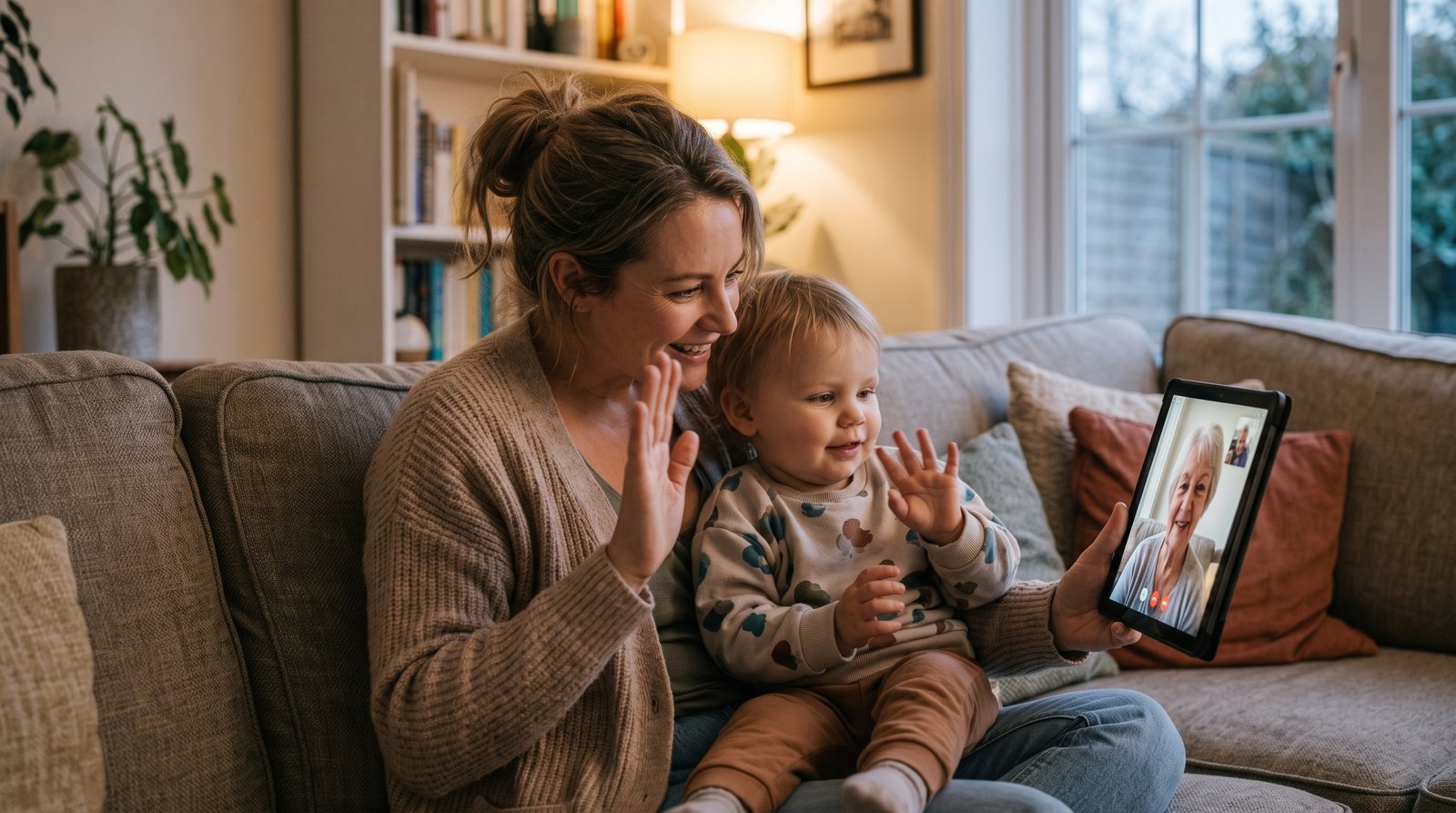
- Use video calls with grandparents and relatives, which are interactive.
- Avoid background TV. It reduces parent-child talk and play.
- Skip screens at meals and bedtime.
- Do not use screens as the only way to calm a child. Children need to learn to handle feelings.
Preschoolers (ages 3–5)
Preschoolers can benefit from high-quality educational media, especially when adults join in. Keep daily use modest, choose age-appropriate content with no ads where possible and keep screens out of bedrooms.
School-age children (ages 6–12)
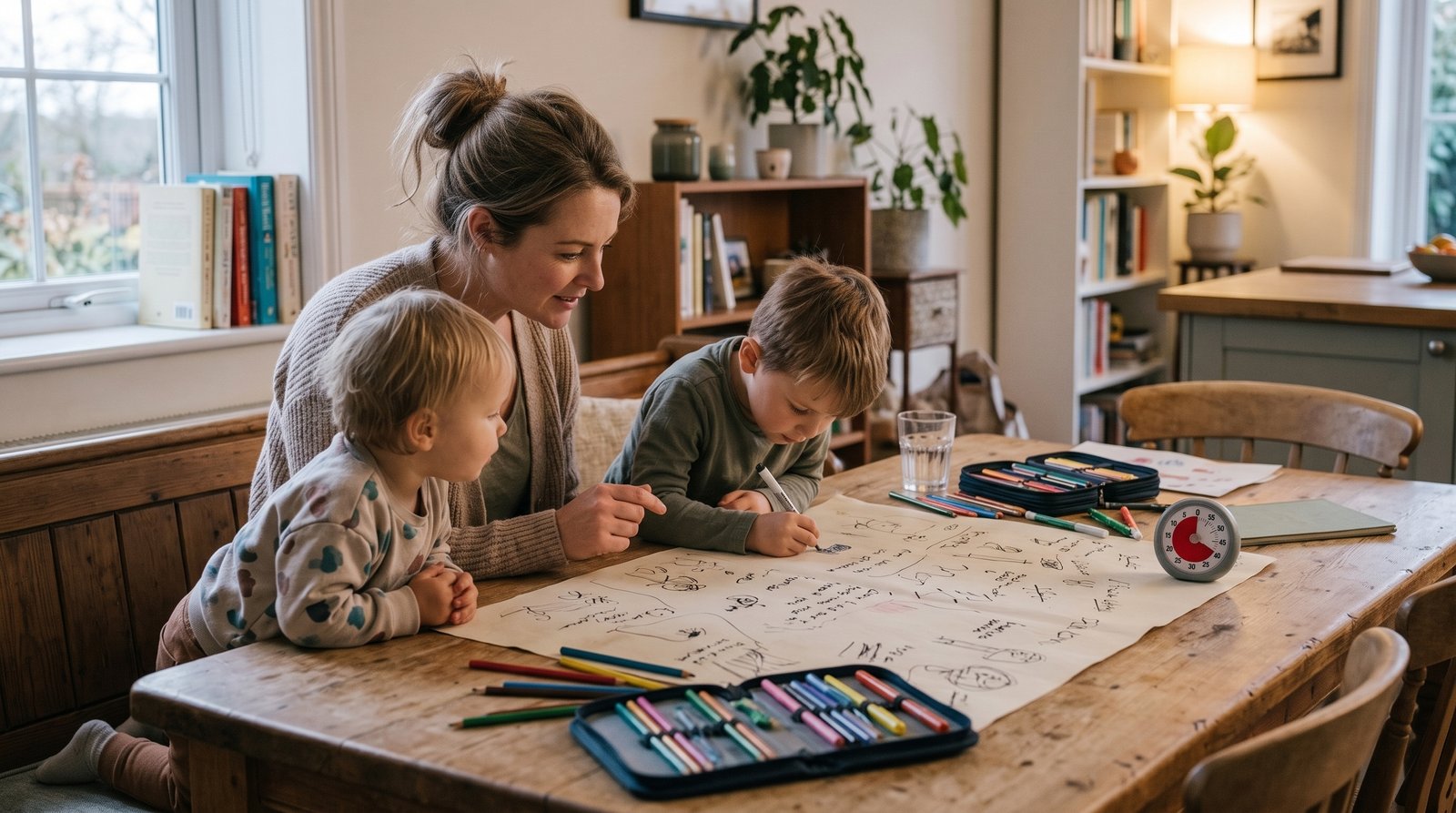
Rather than a fixed number of minutes, the AAP recommends setting consistent limits and making sure media does not take the place of sleep, exercise, schoolwork and family time. A written family media plan can help (see our guide on how to reduce screen time for kids). Consider:
- Screen-free times (meals, homework, one hour before bed).
- Screen-free zones (bedrooms, dinner table).
- Content that fits the child’s age, checked by parents.
- Time spent on creative or social activities, which differs from passive scrolling.
Teens (ages 13–17)
Teens use screens for school, friendships and entertainment. Aim for balance: enough sleep (8–10 hours), daily physical activity and time with family. Talk openly about social media pressure, privacy and online safety, and agree on phone-free sleep. For more on this age group, see online safety for kids and when should kids get a phone.
Not all screen time is equal
The AAP’s 5 C’s help families think about media use:
- Child: how does your child respond to media?
- Content: is it age-appropriate and suitable?
- Calm: does your child have other ways to manage emotions and settle down?
- Crowding out: does media displace sleep, play, movement or family time?
- Communication: talk regularly with your child about what they see and do online.
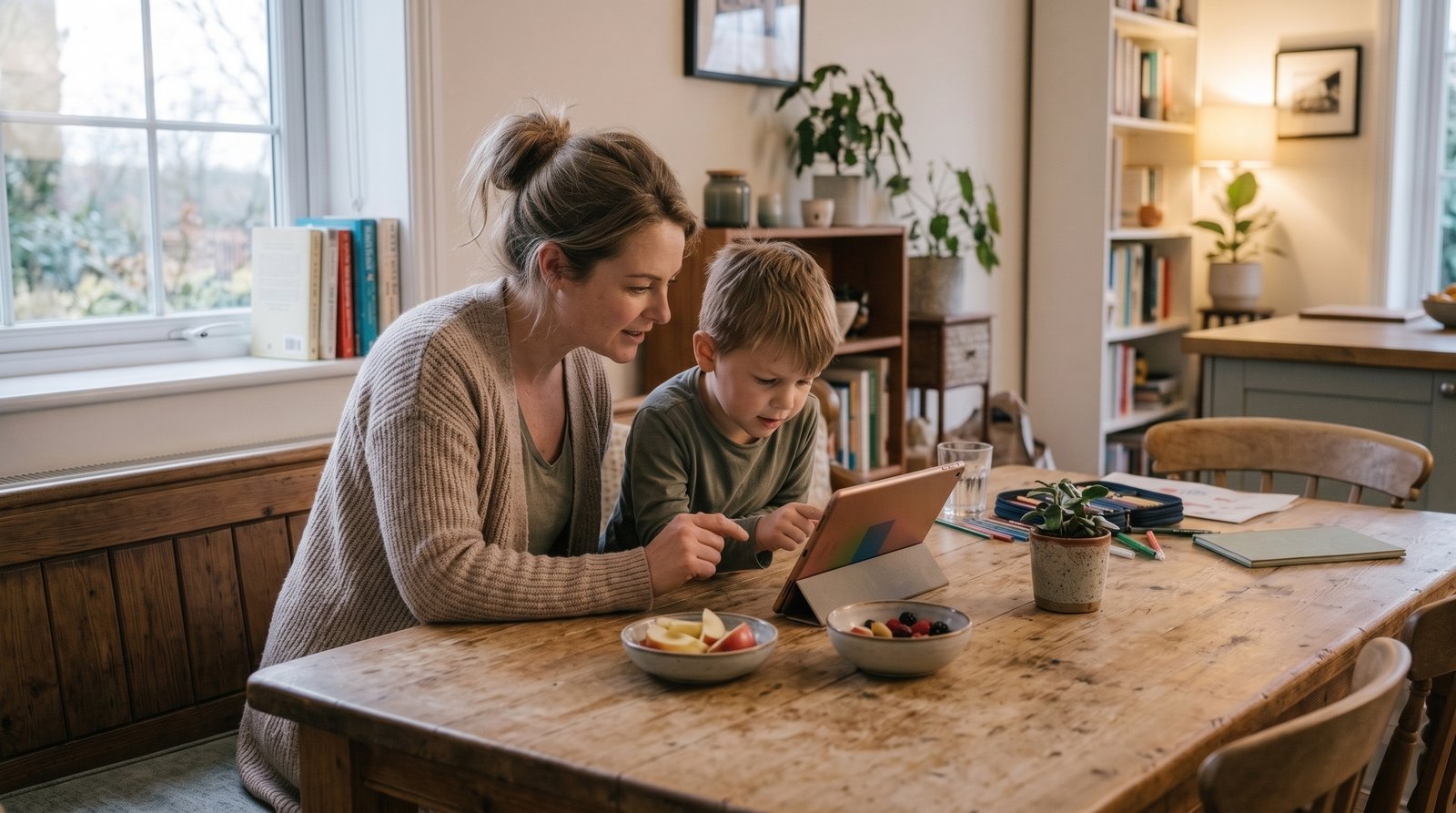
Video calls, creative apps and educational shows are different from endless autoplay videos or infinite scroll feeds.
Signs screen time may be too much
- Frequent meltdowns when screens are turned off
- Trouble sleeping, or screens running into bedtime
- Less interest in play, outdoor activity or friends
- Dropping grades or difficulty focusing
- Hiding screen use or lying about it
Healthy screen habits for the whole family
- Model the behaviour. Children copy how adults use phones.
- Keep screens out of bedrooms overnight.
- Turn off notifications and autoplay.
- Plan screen-free activities such as walks, board games and cooking.
- Check in on what your child watches and plays.
The takeaway
The youngest children need the least screen time, and older children need clear limits and a healthy balance. Quality, timing and connection matter as much as minutes. Review your family’s approach as your child grows.
Disclaimer: This article is general information and not medical advice. Guidelines are updated from time to time, so check the latest WHO and AAP recommendations.